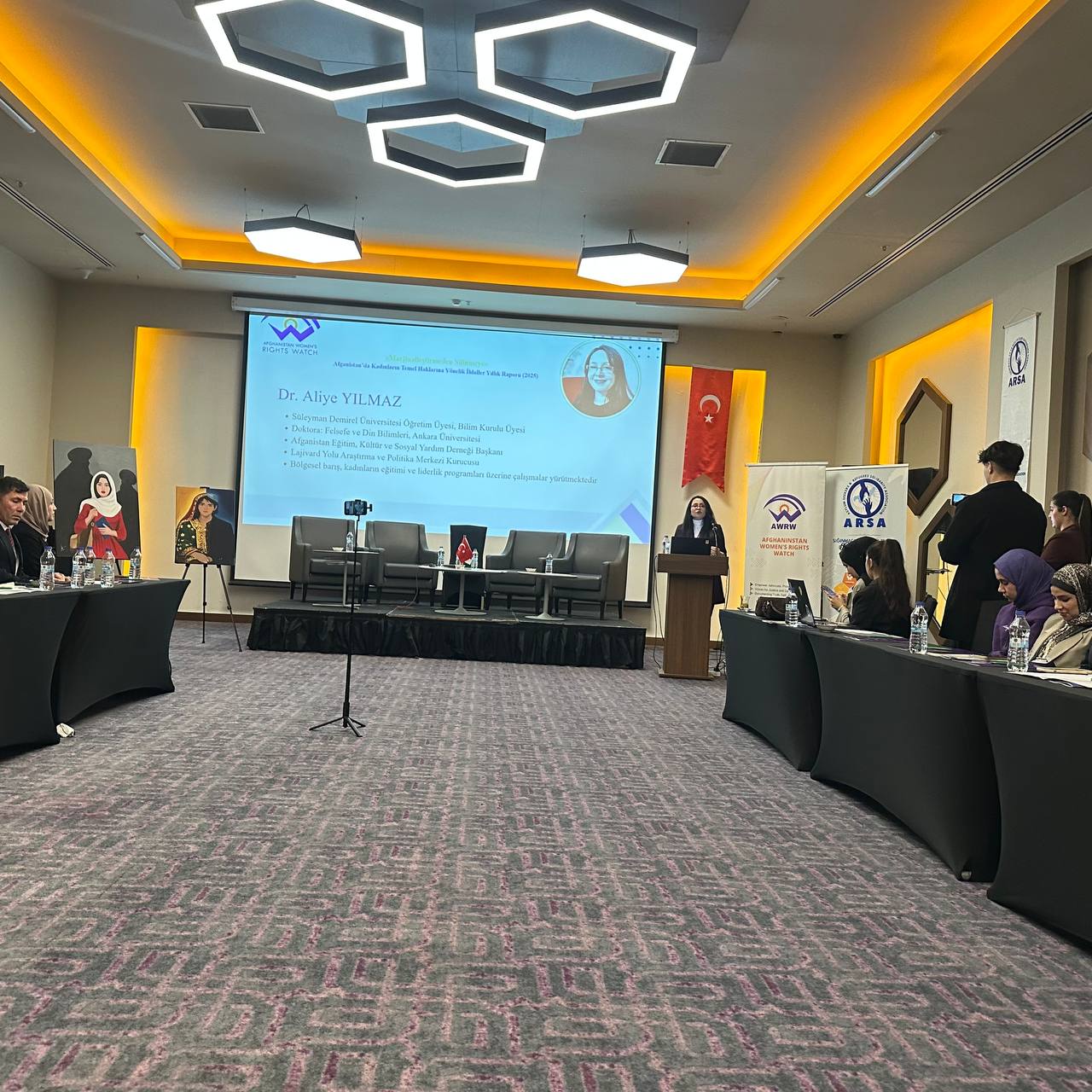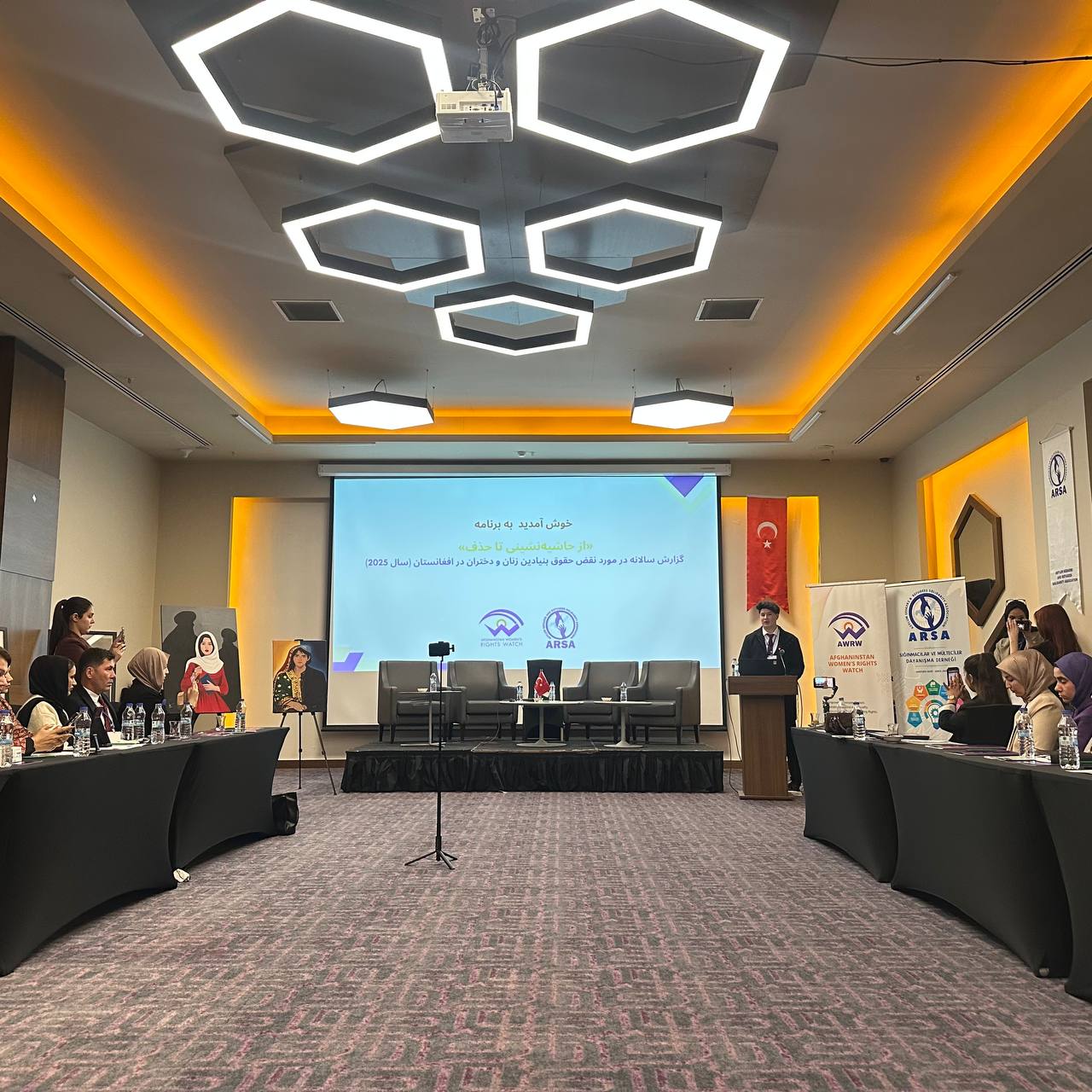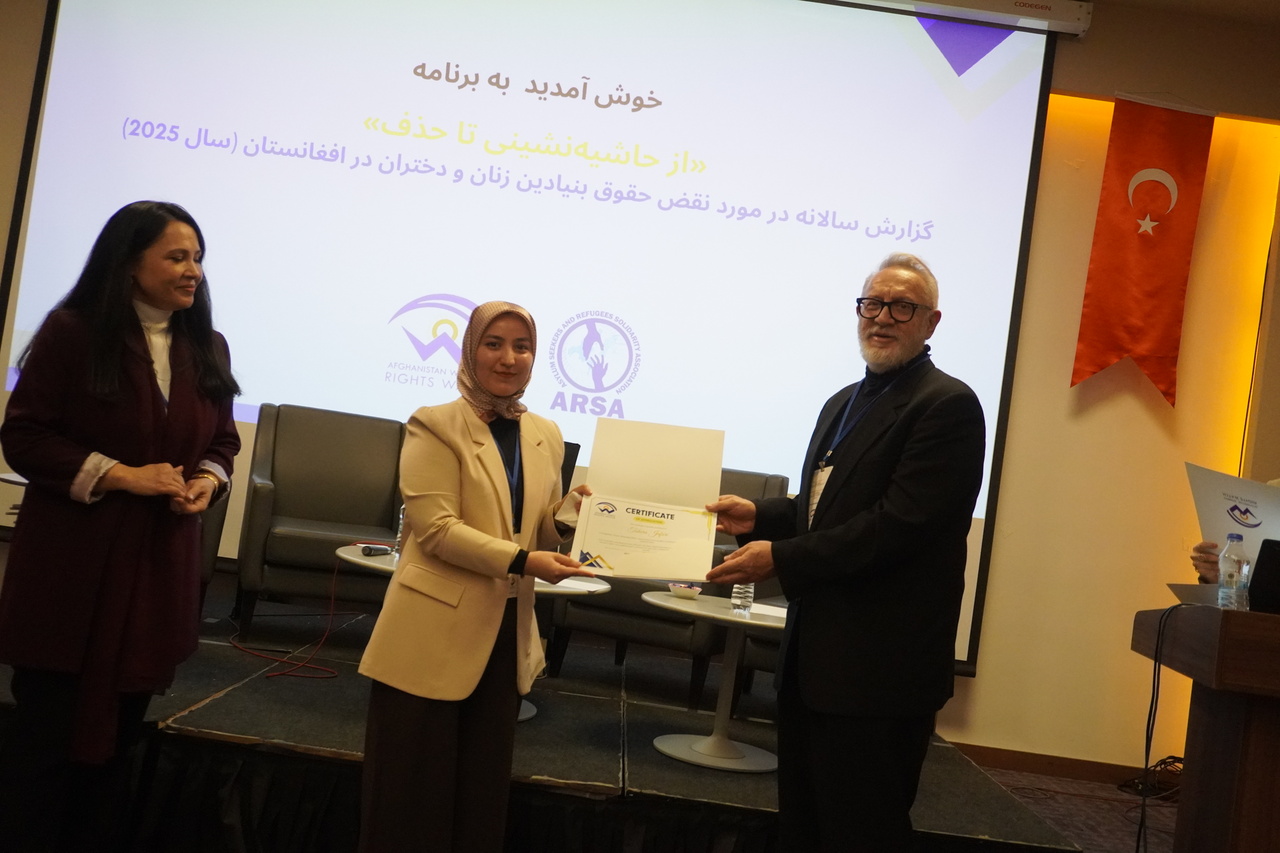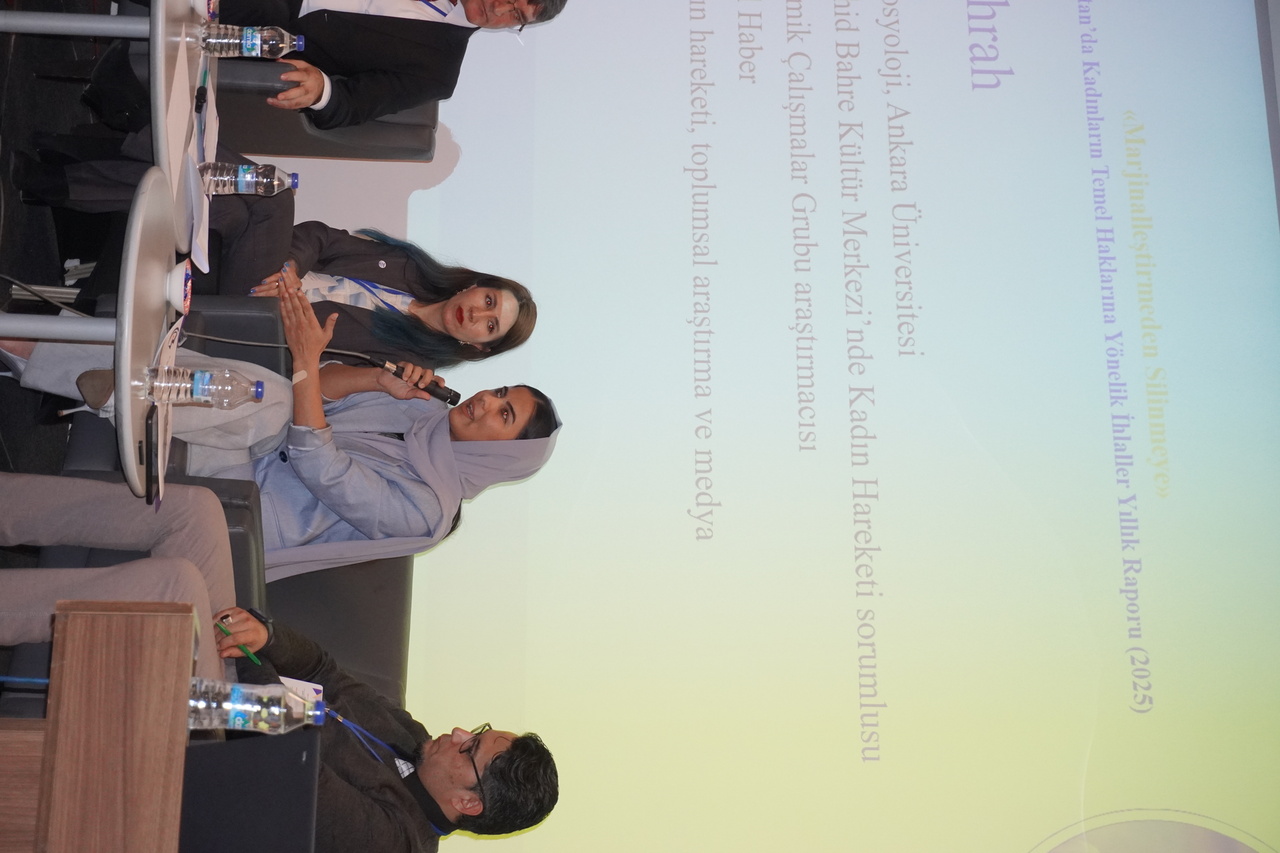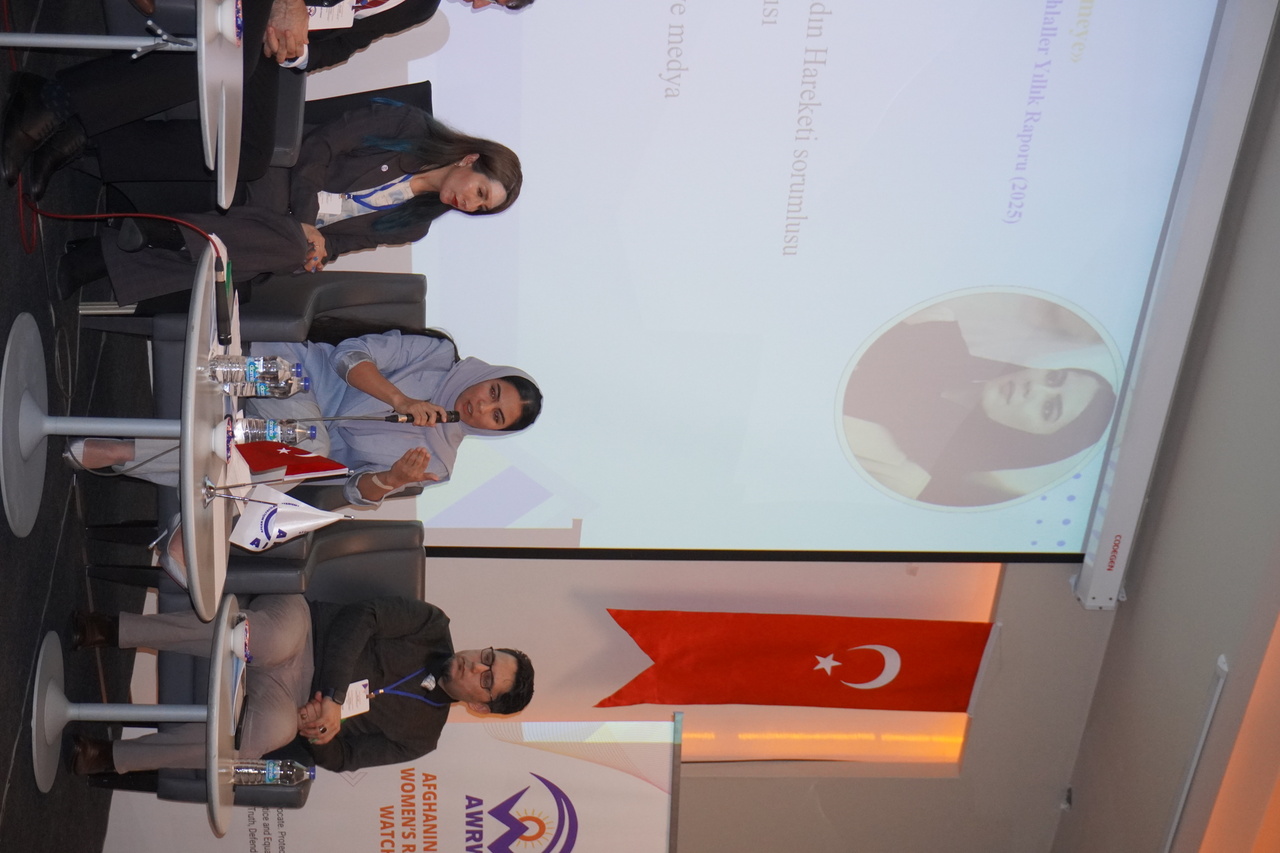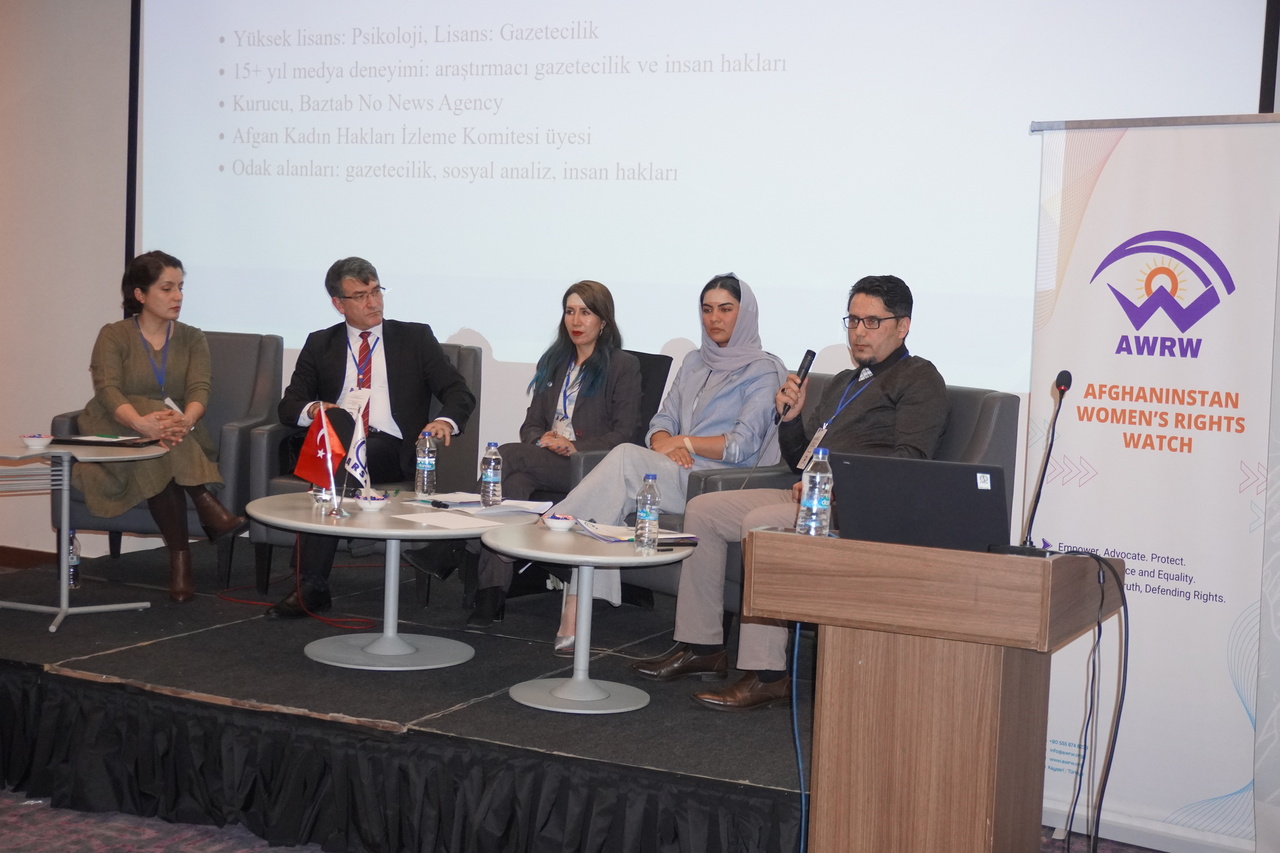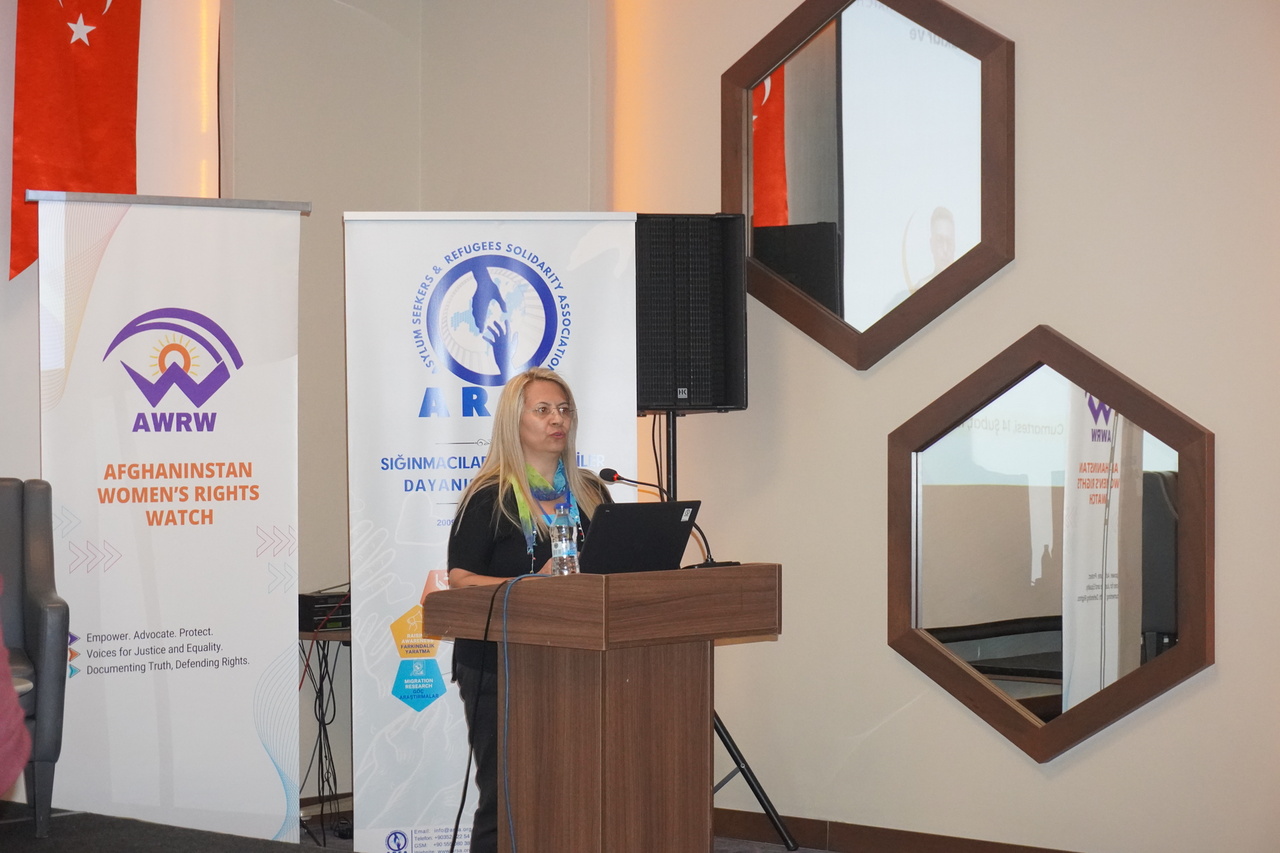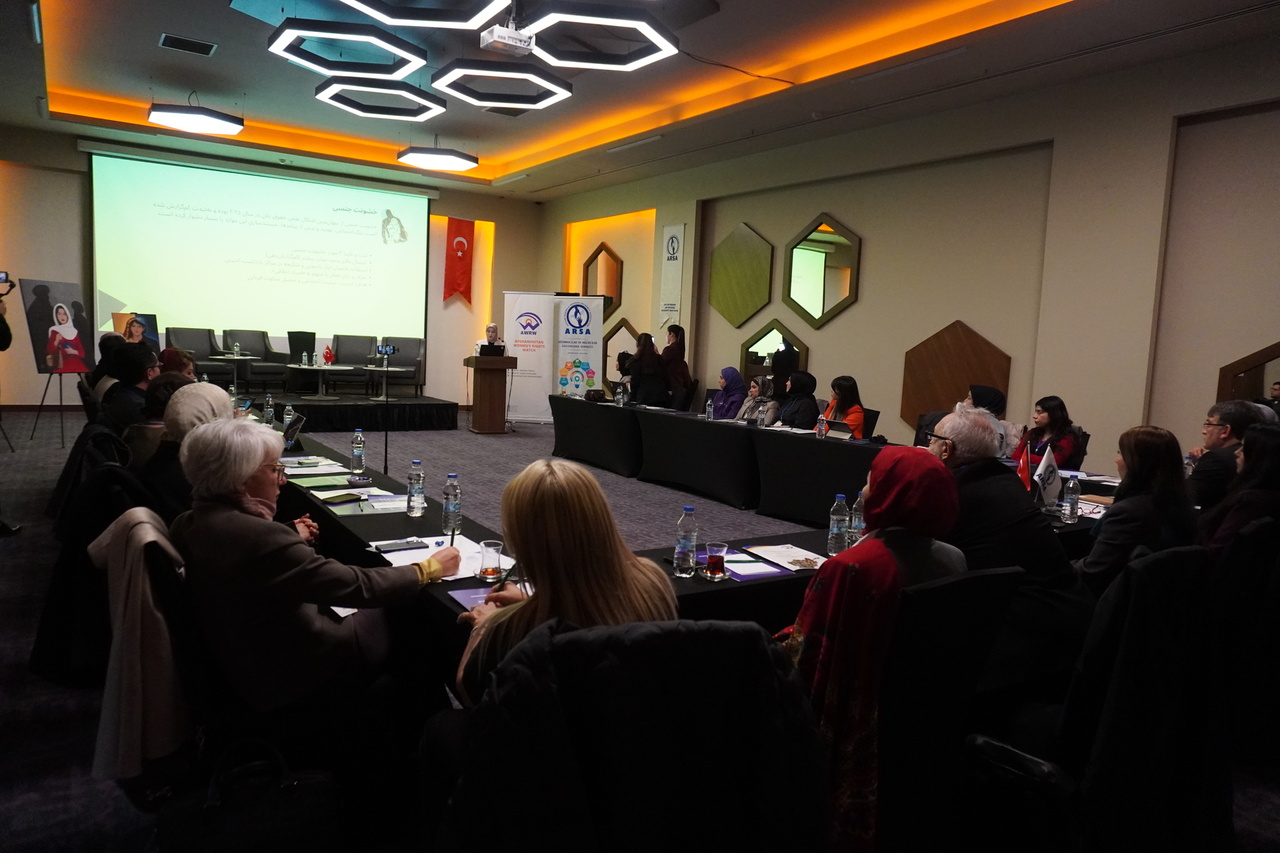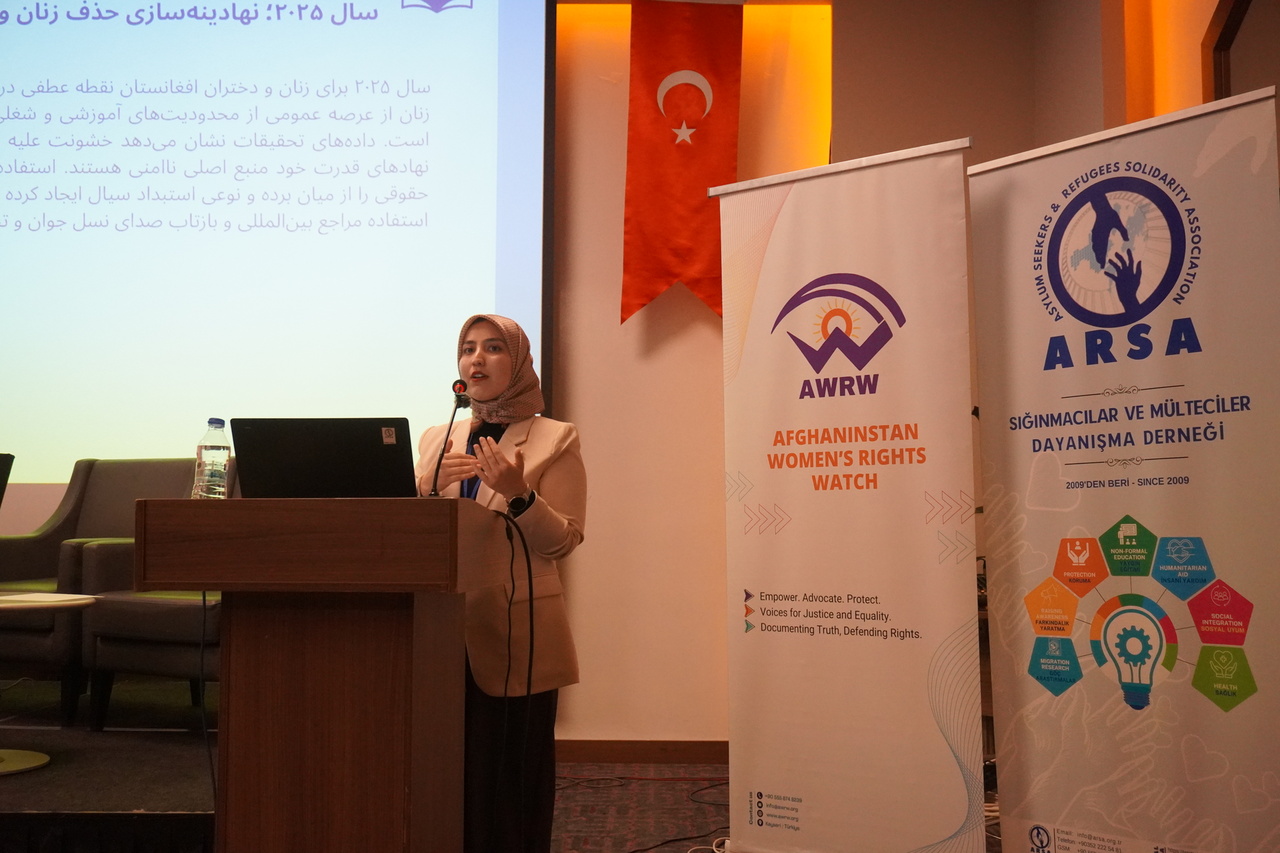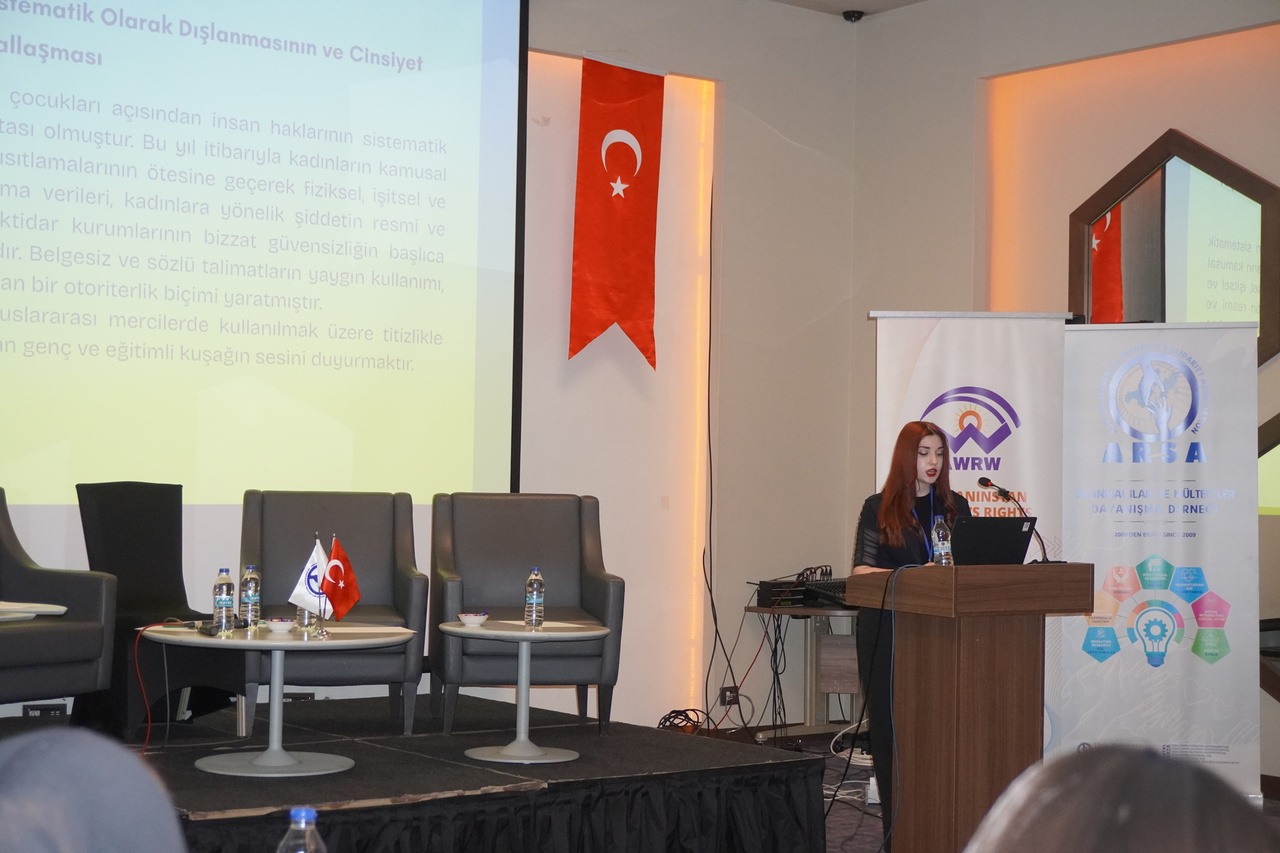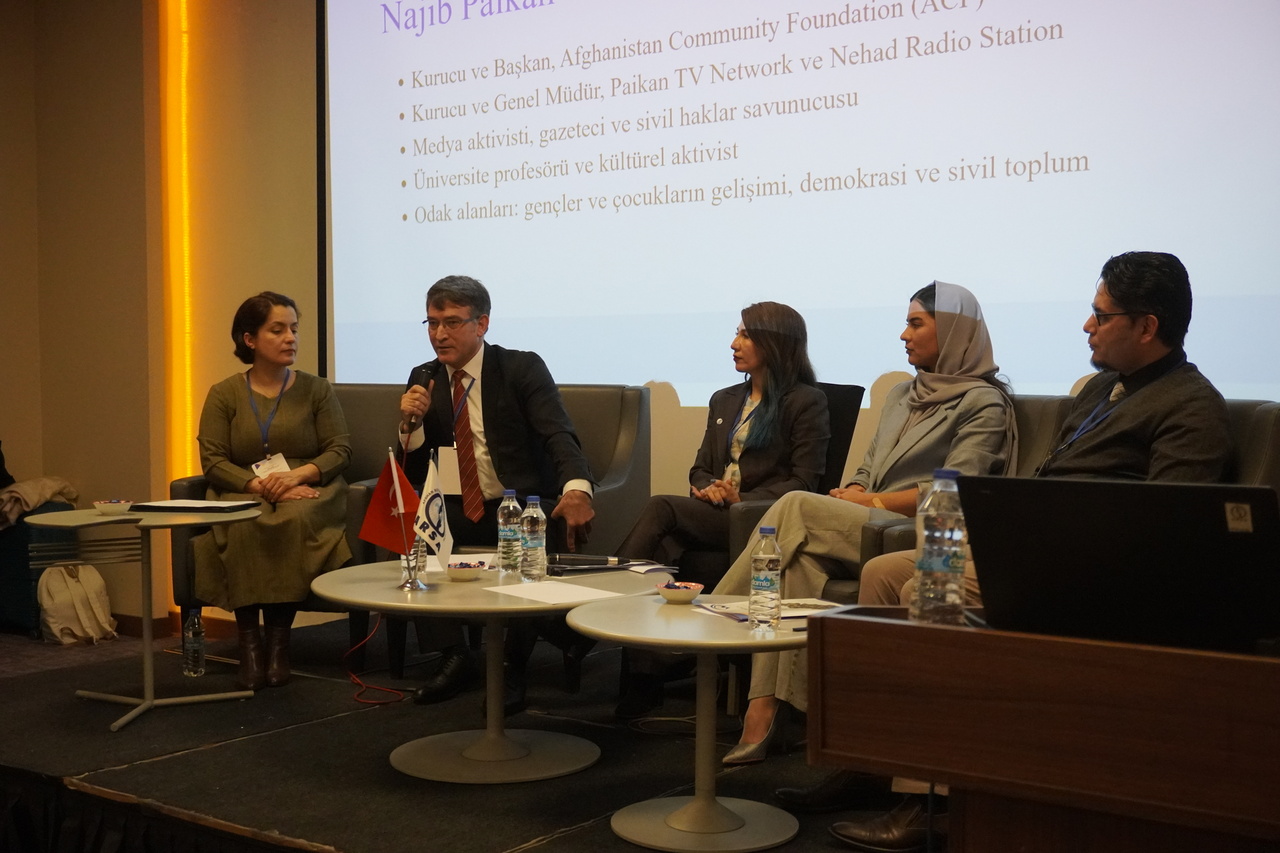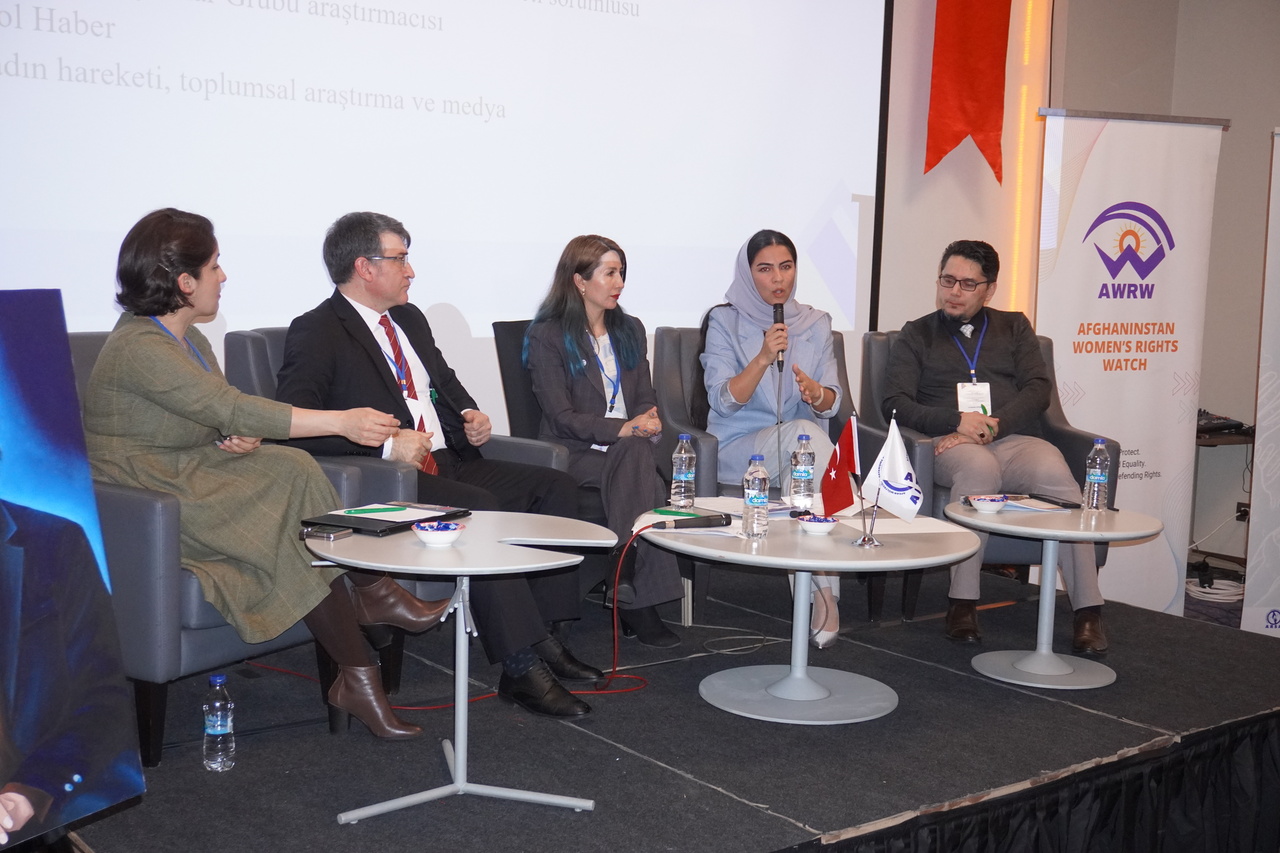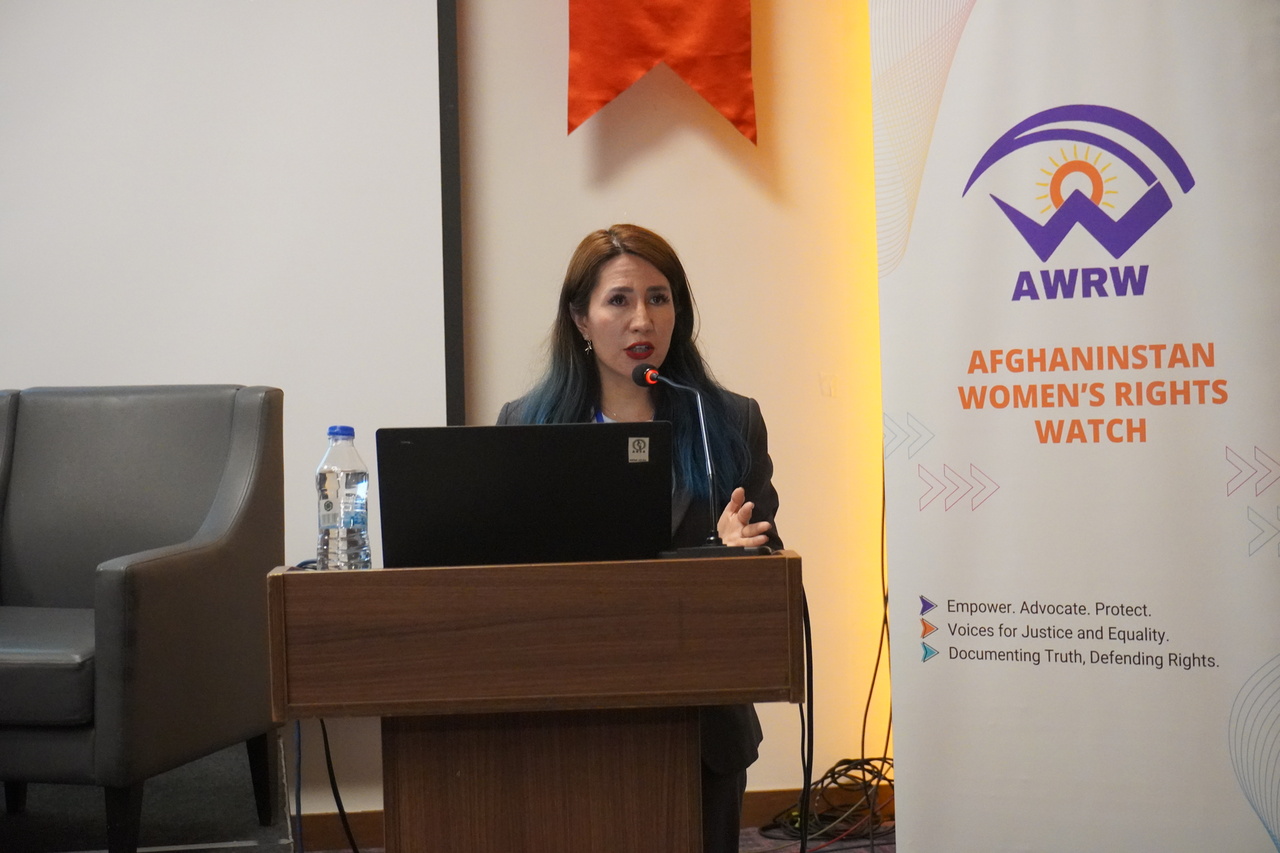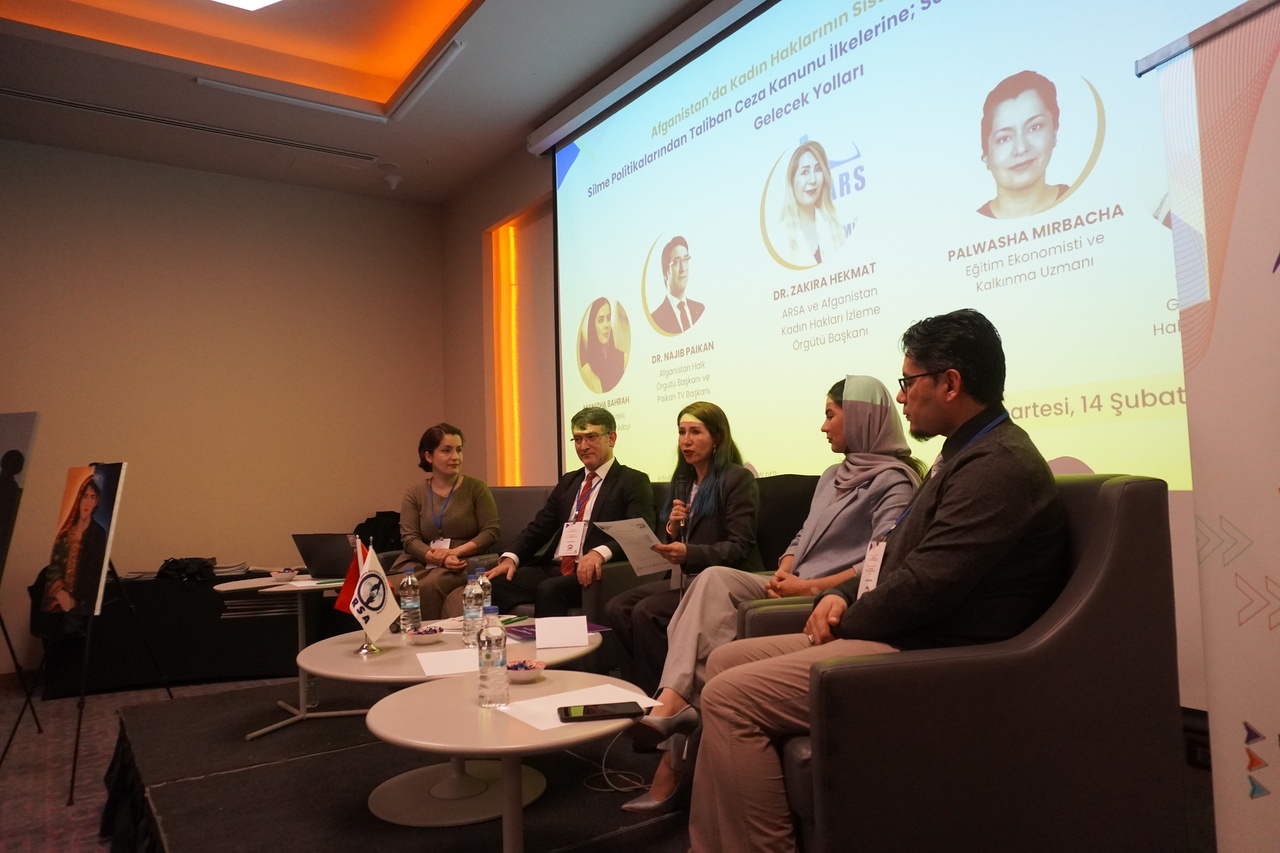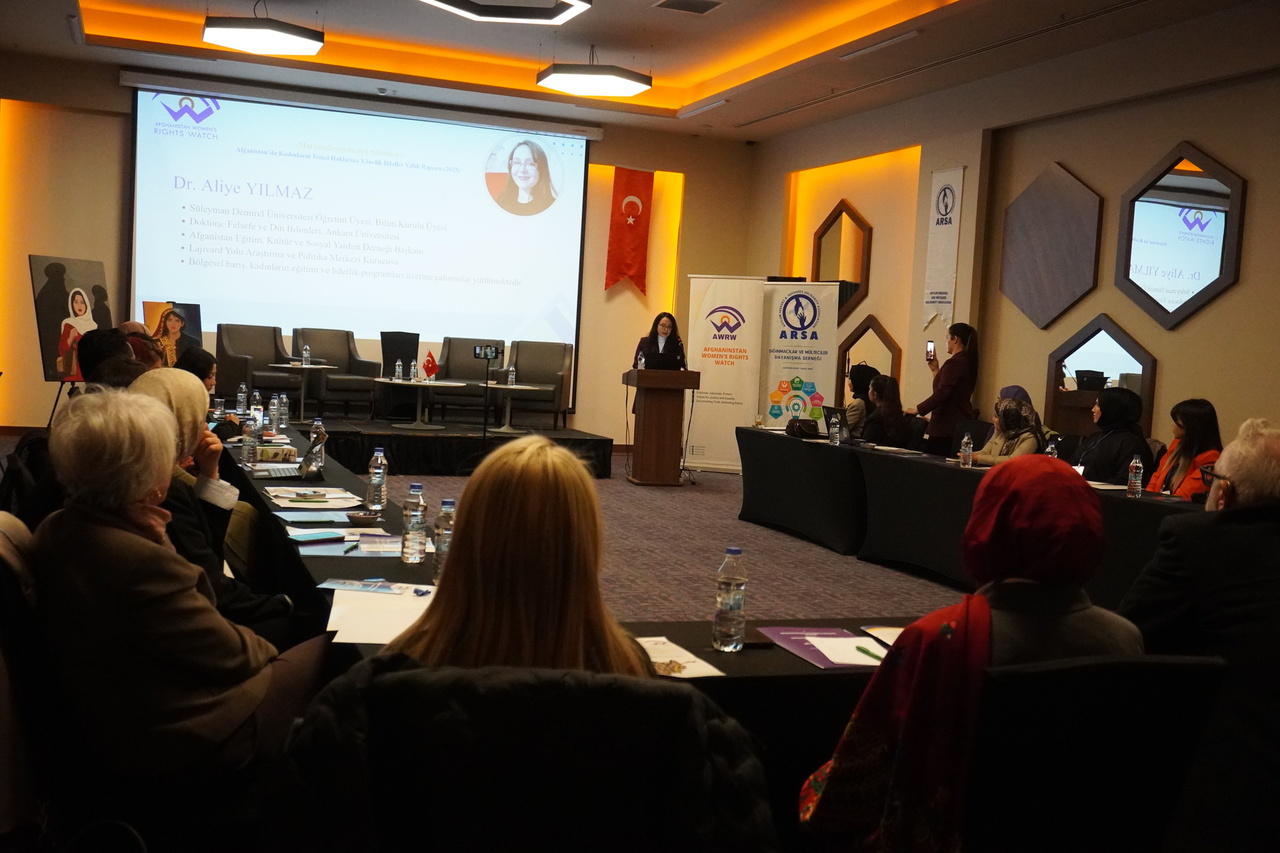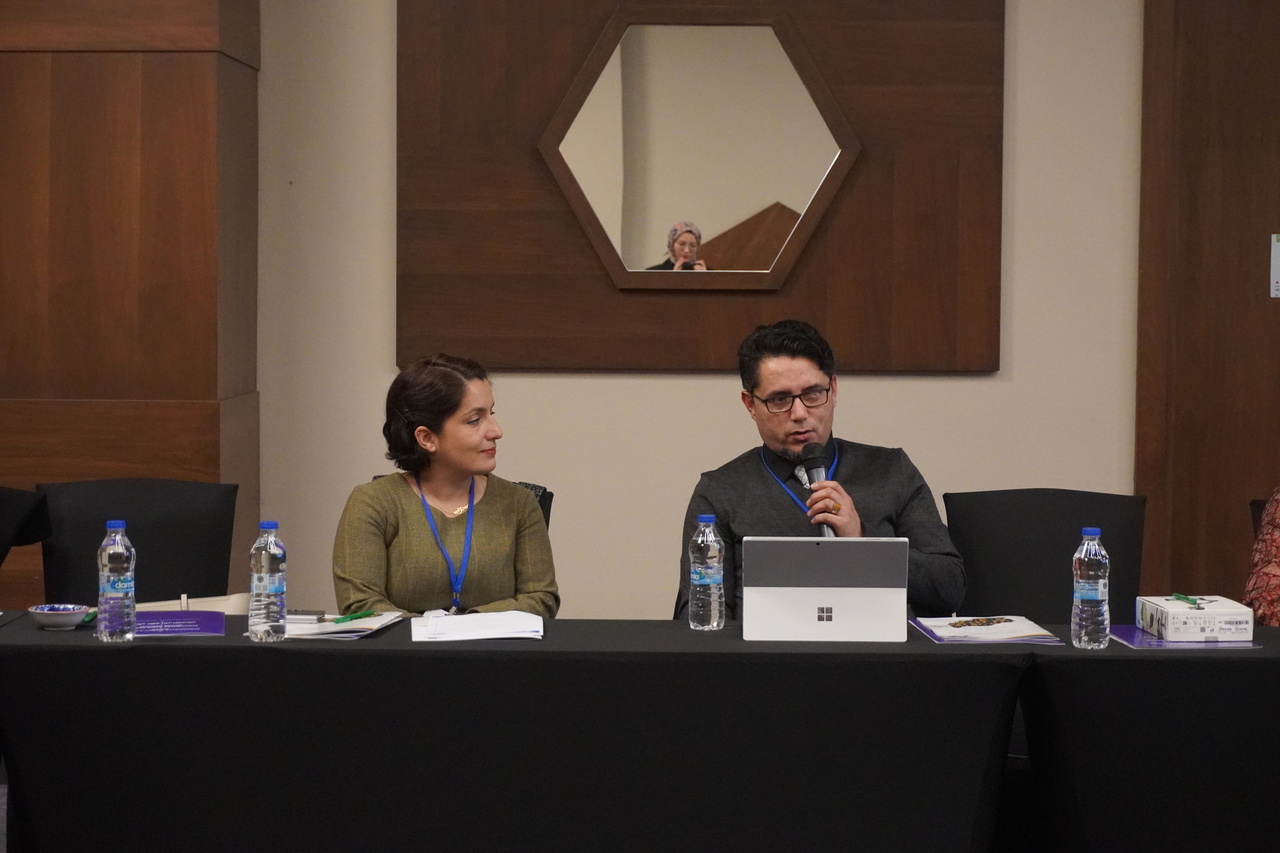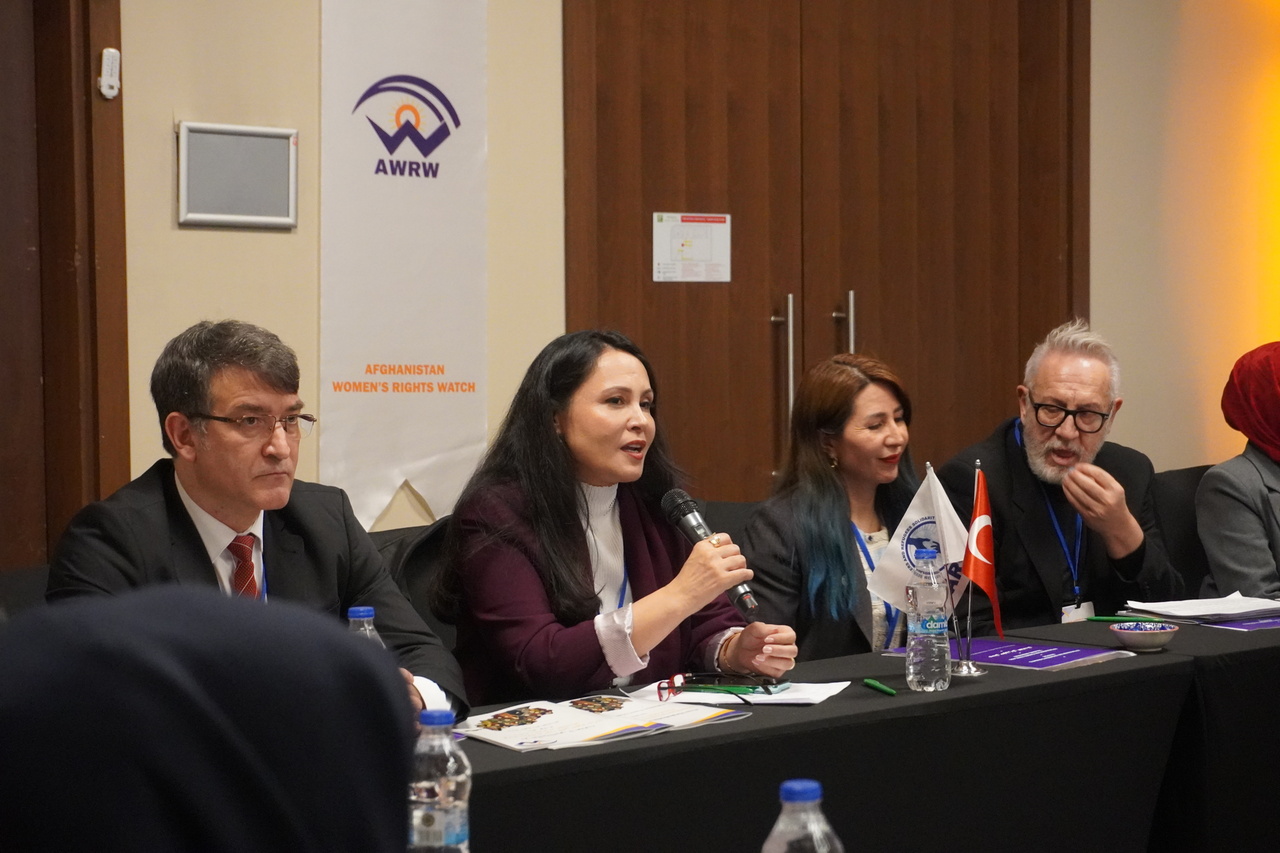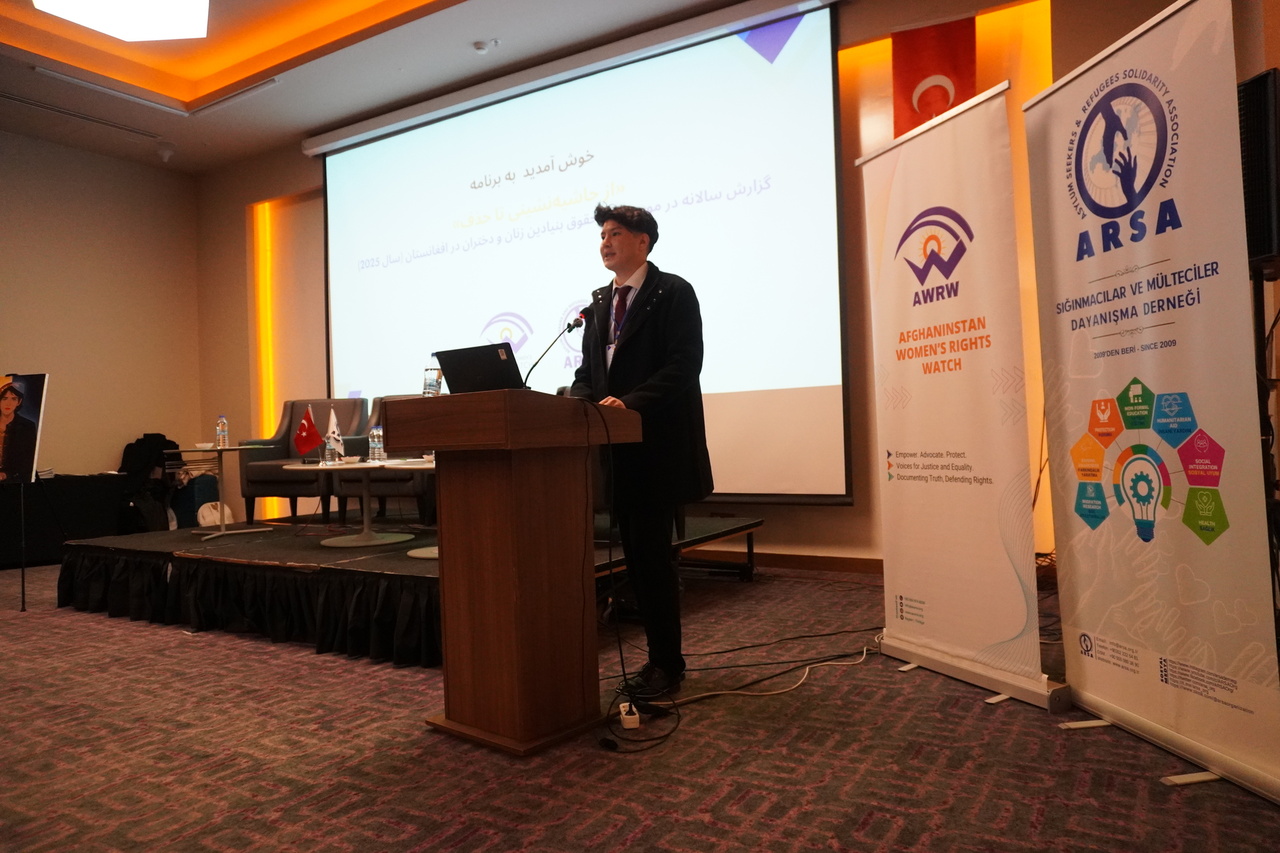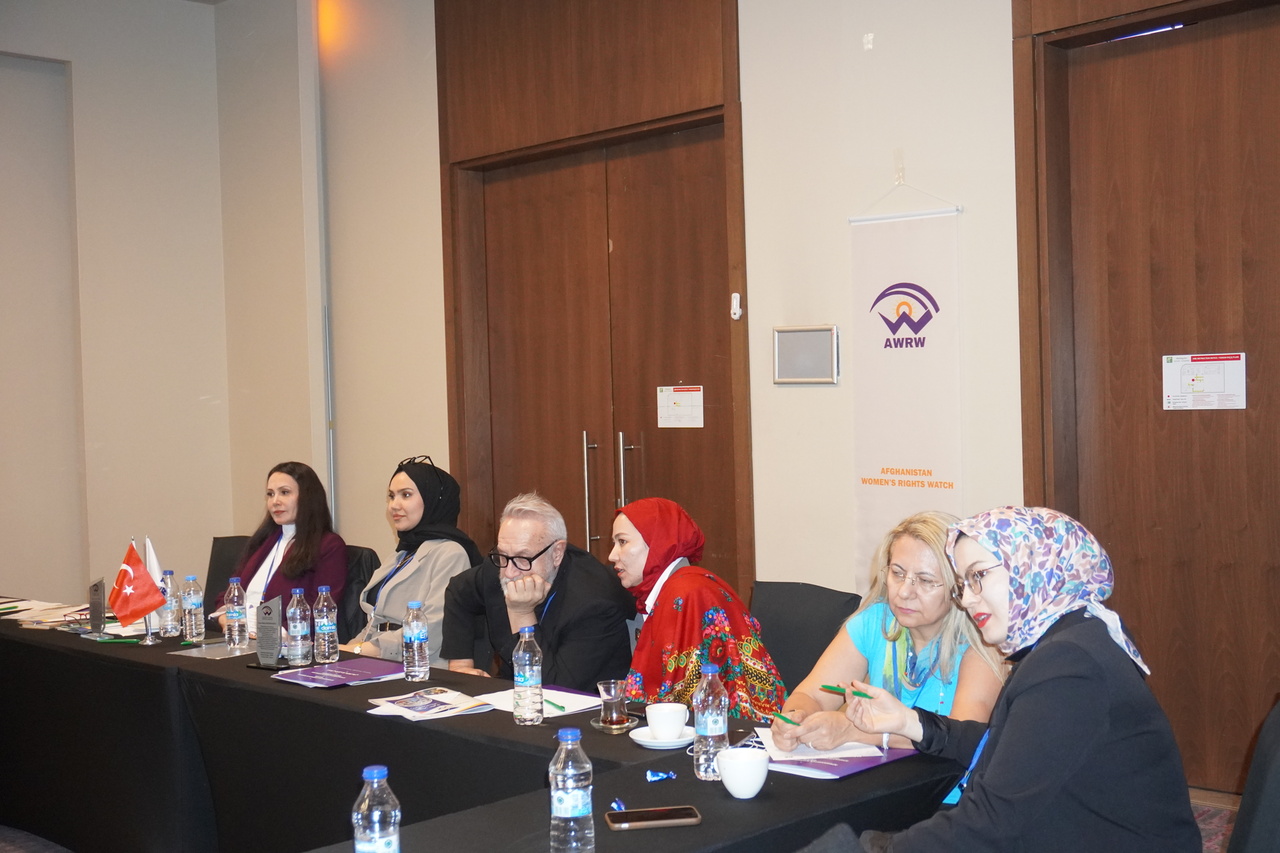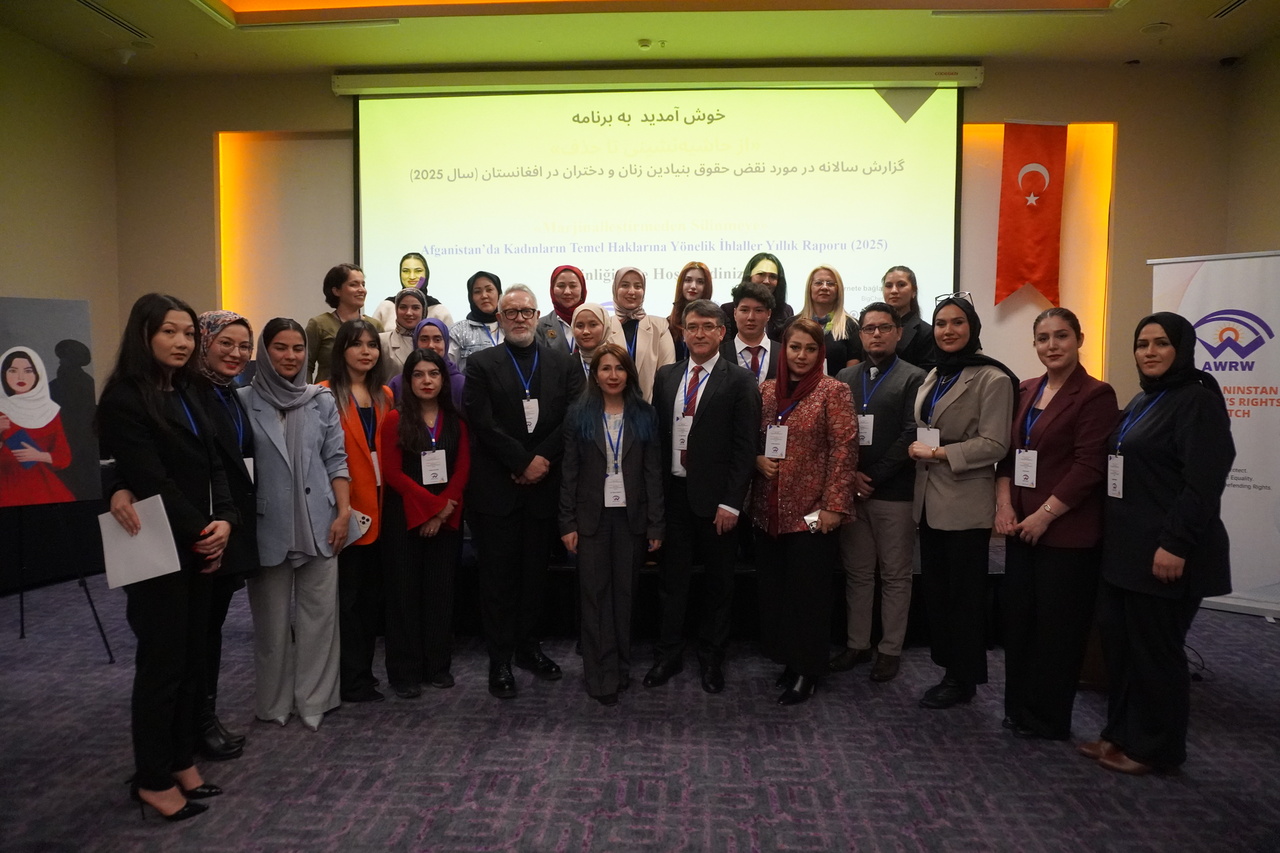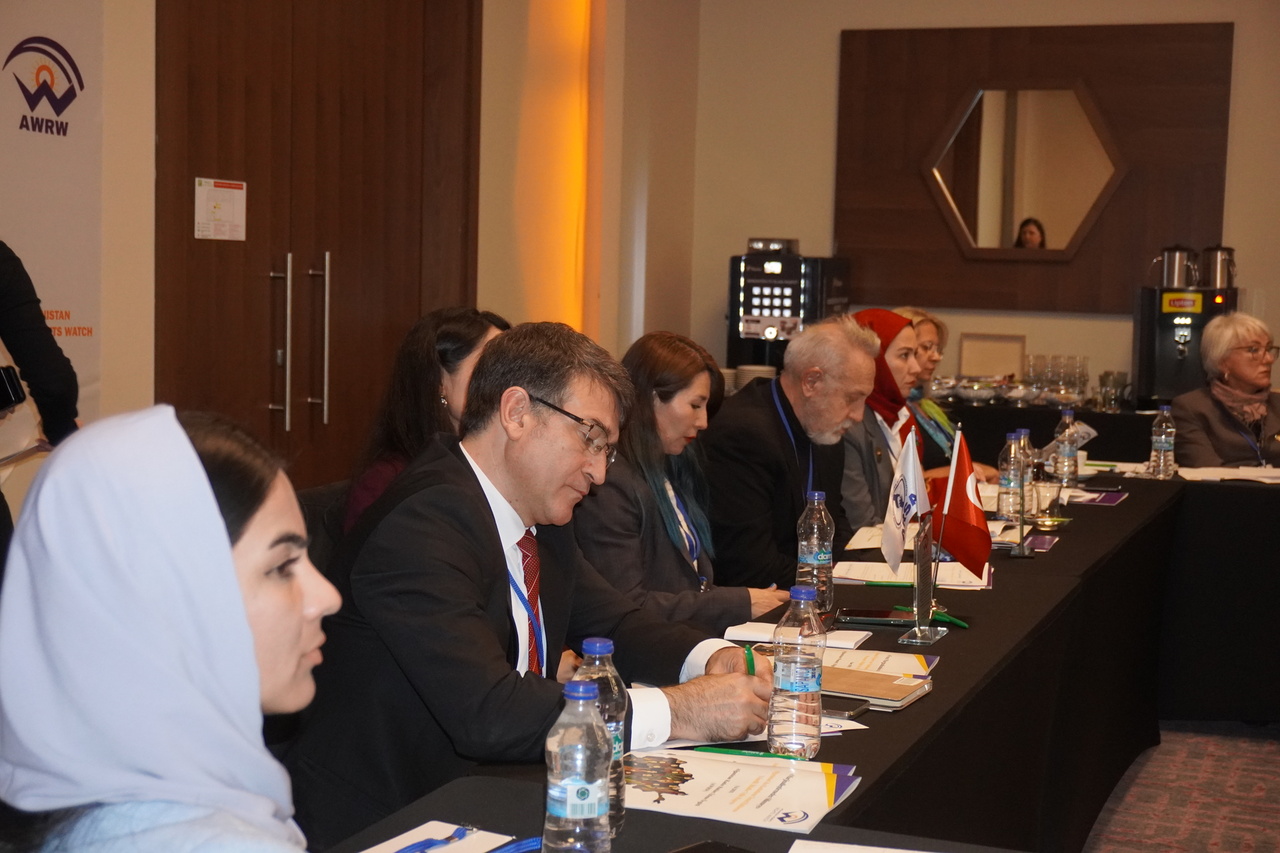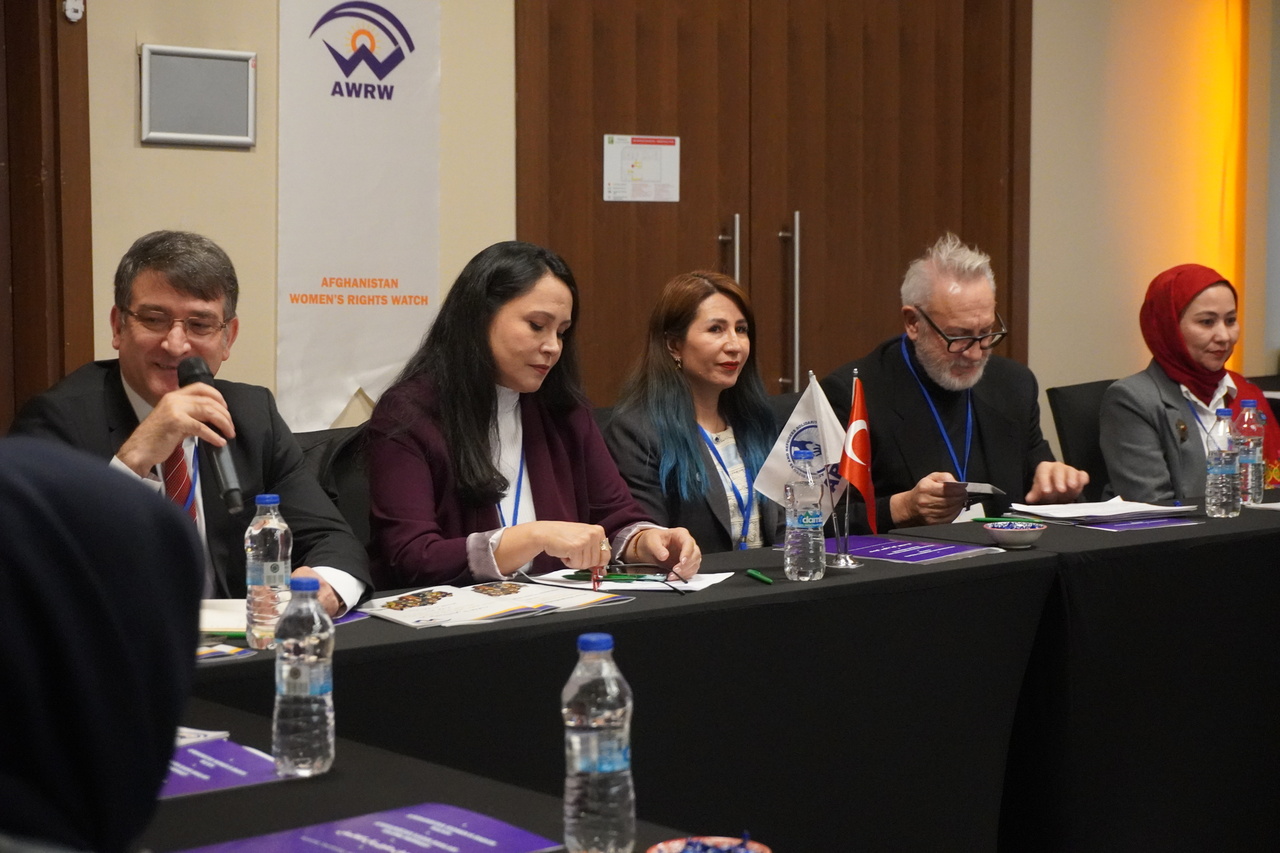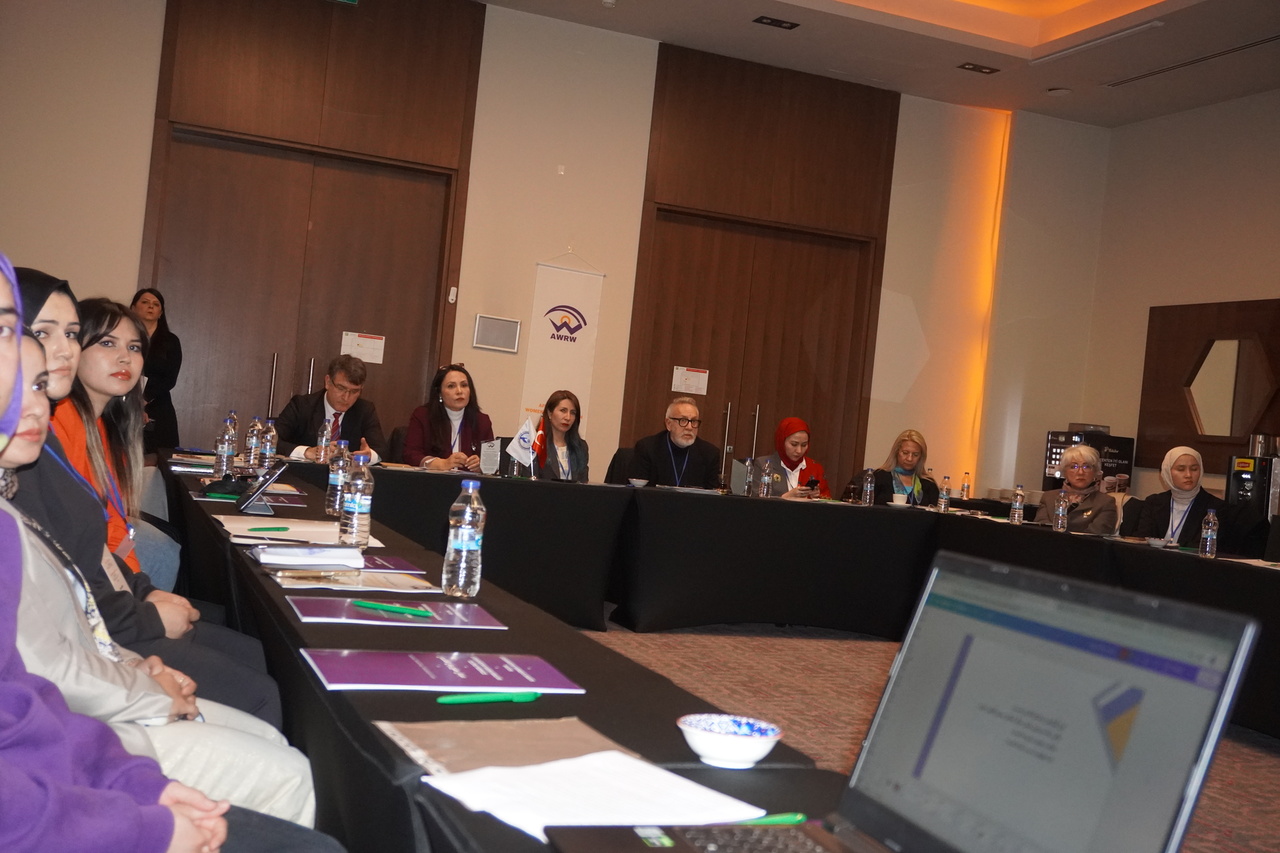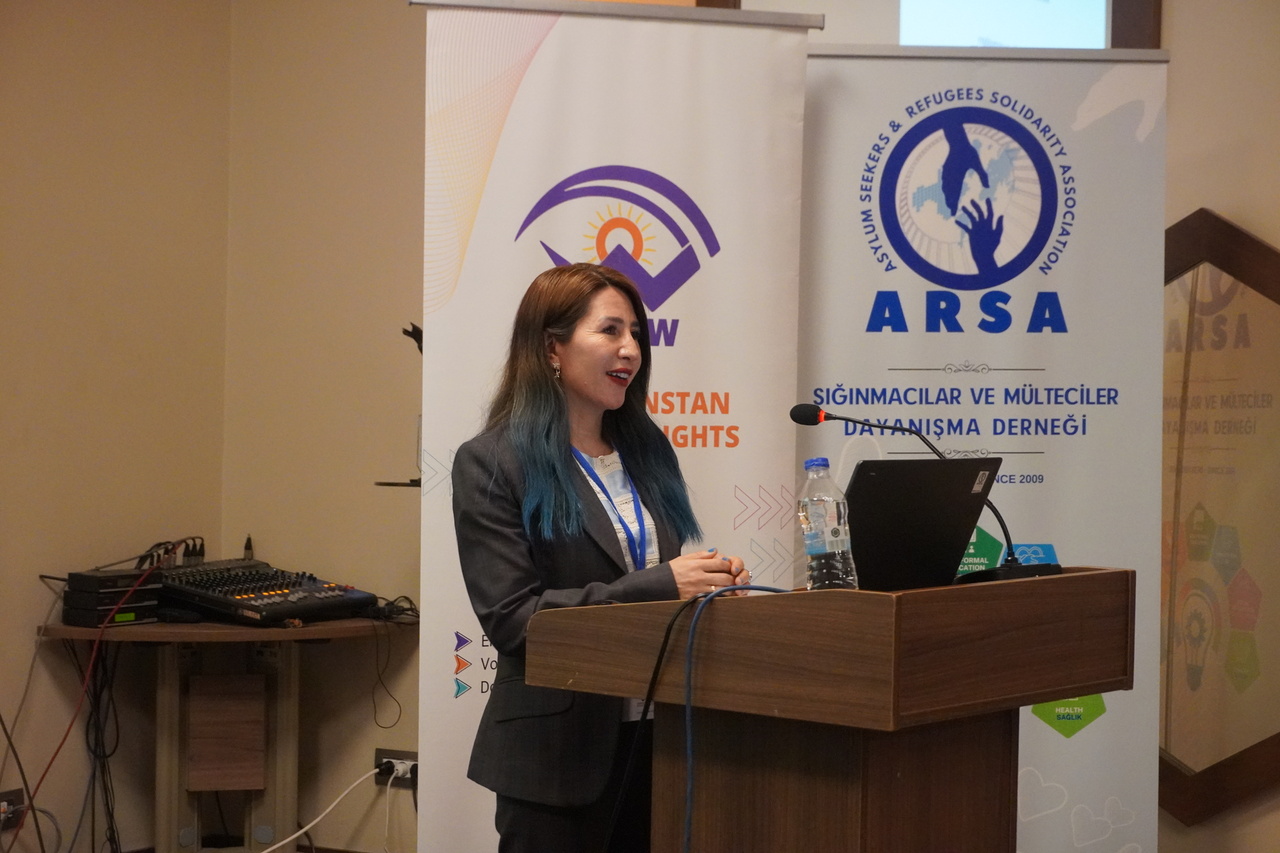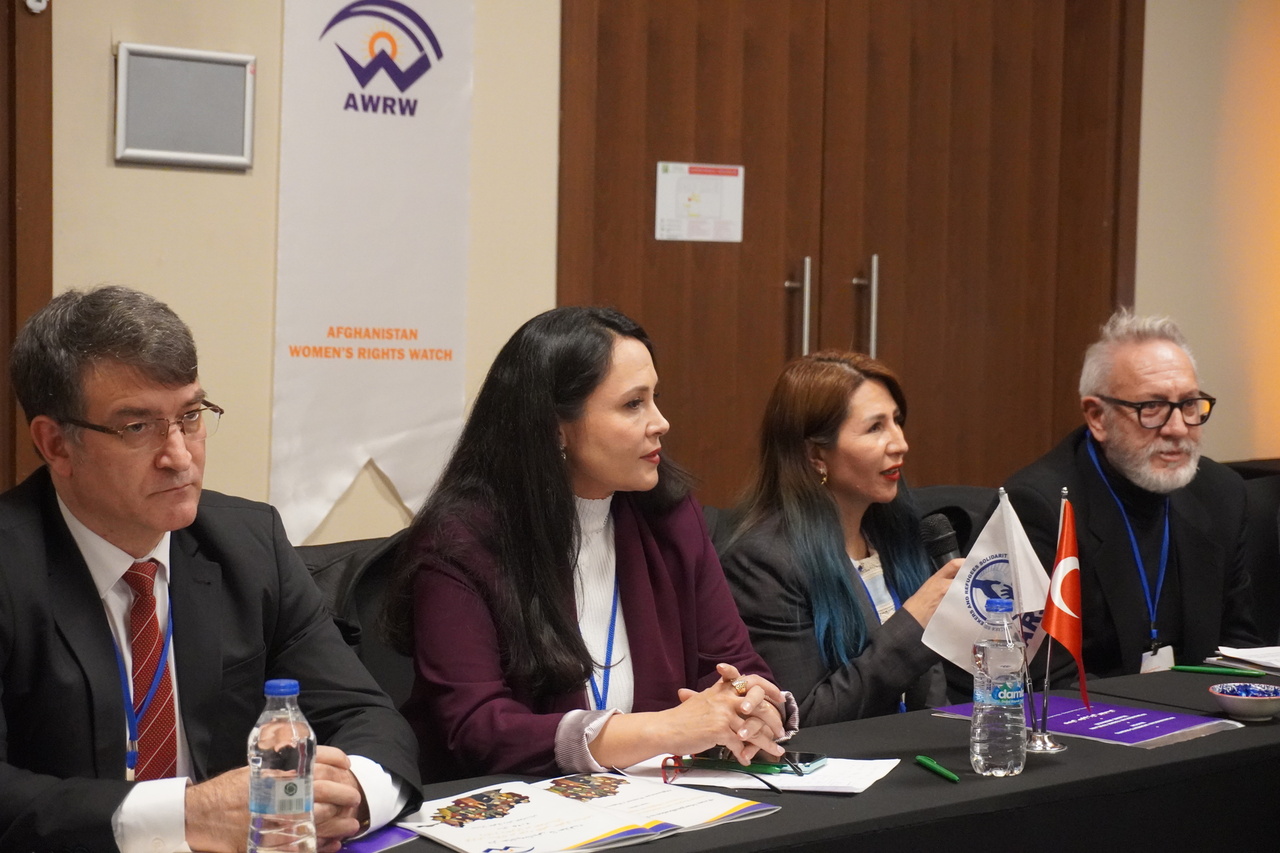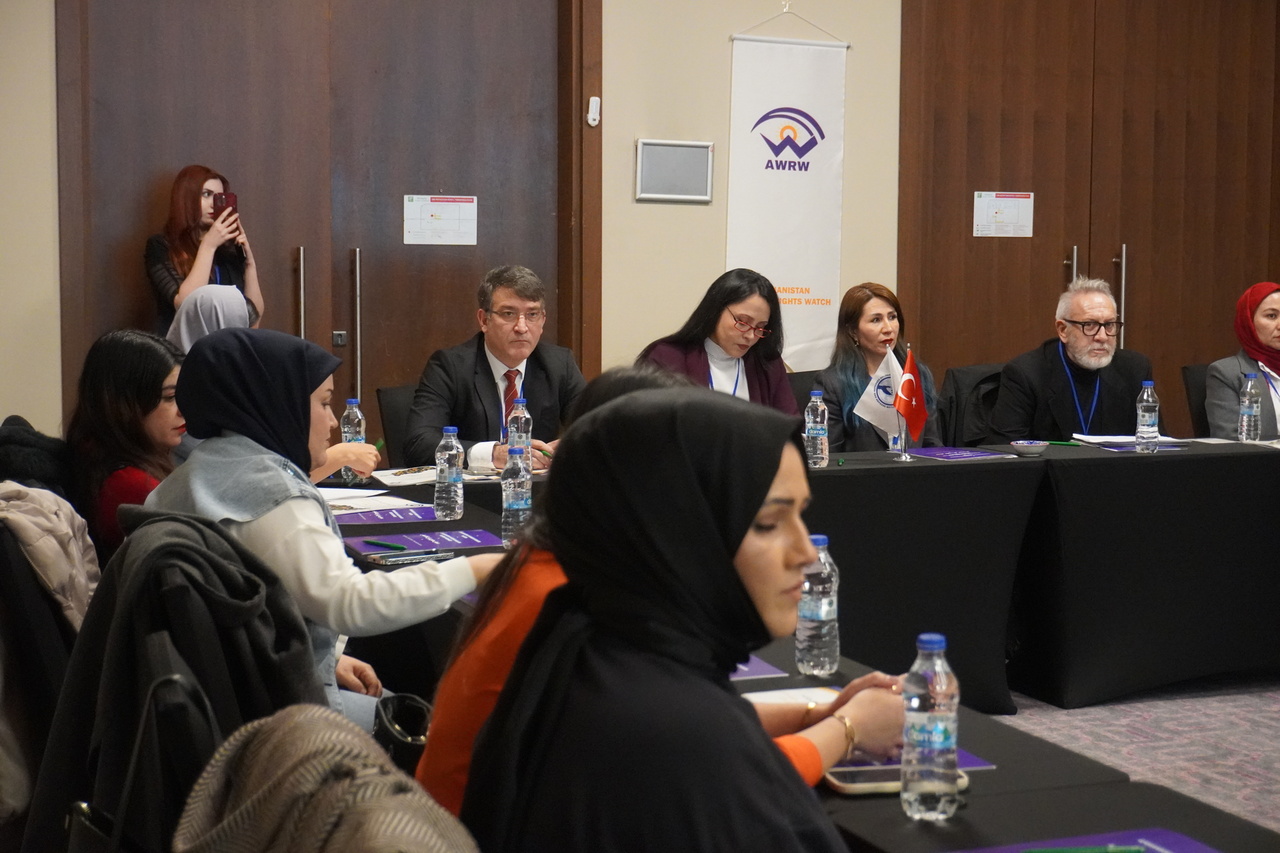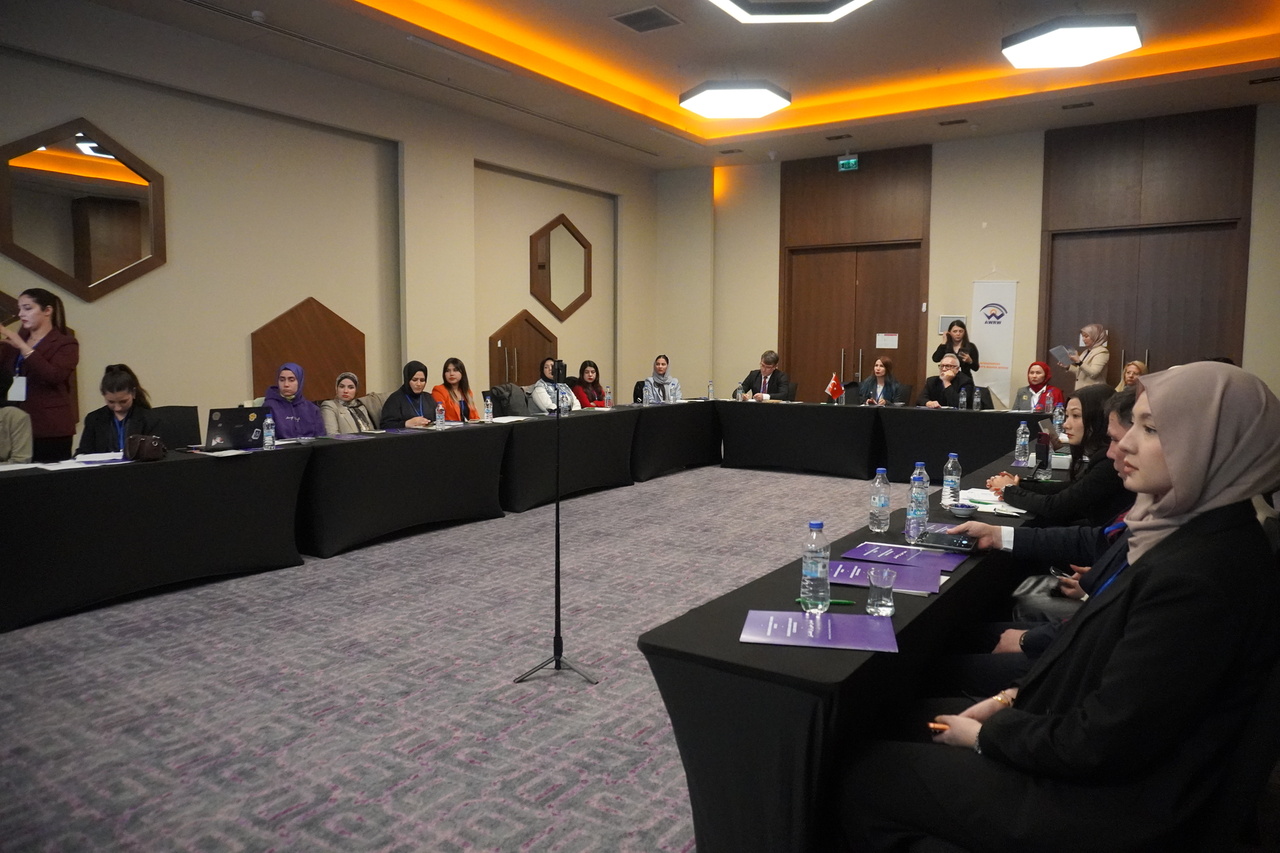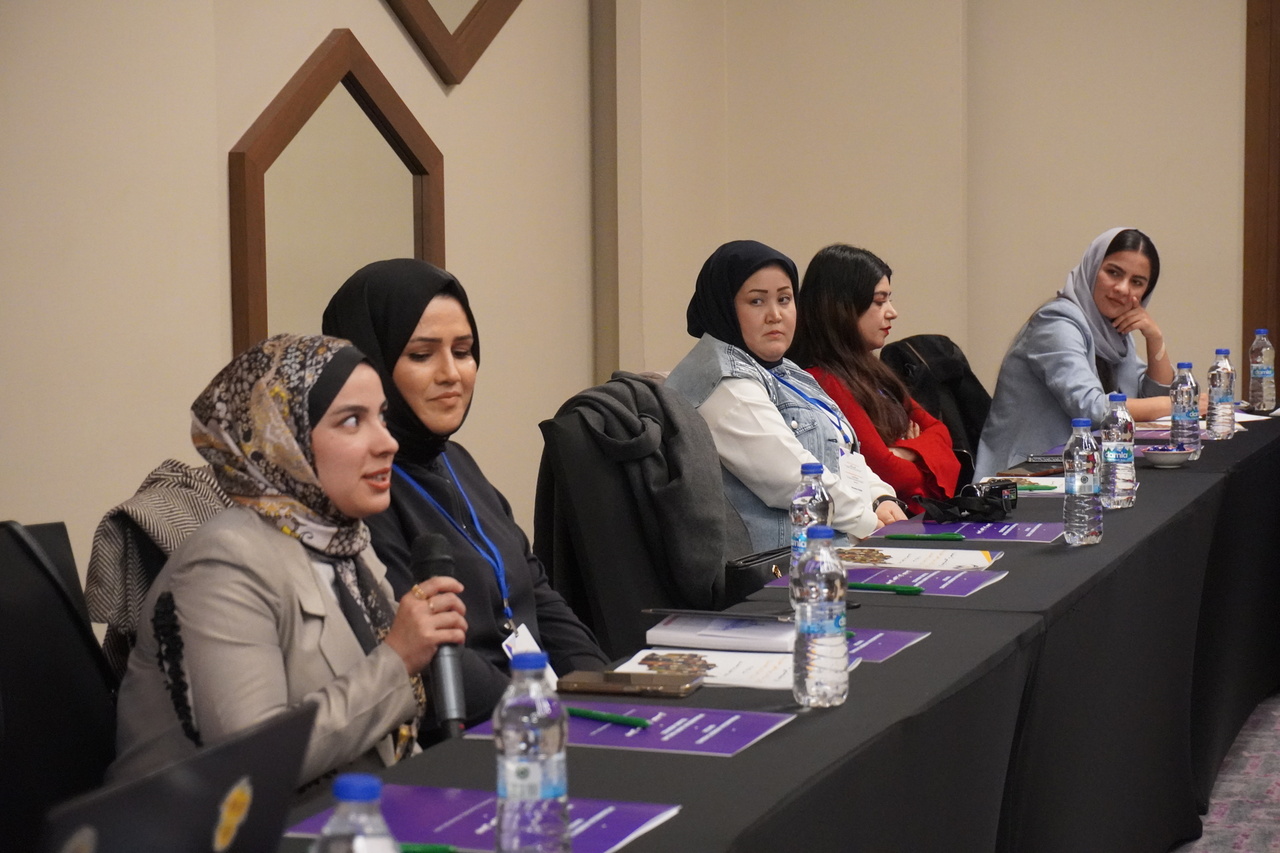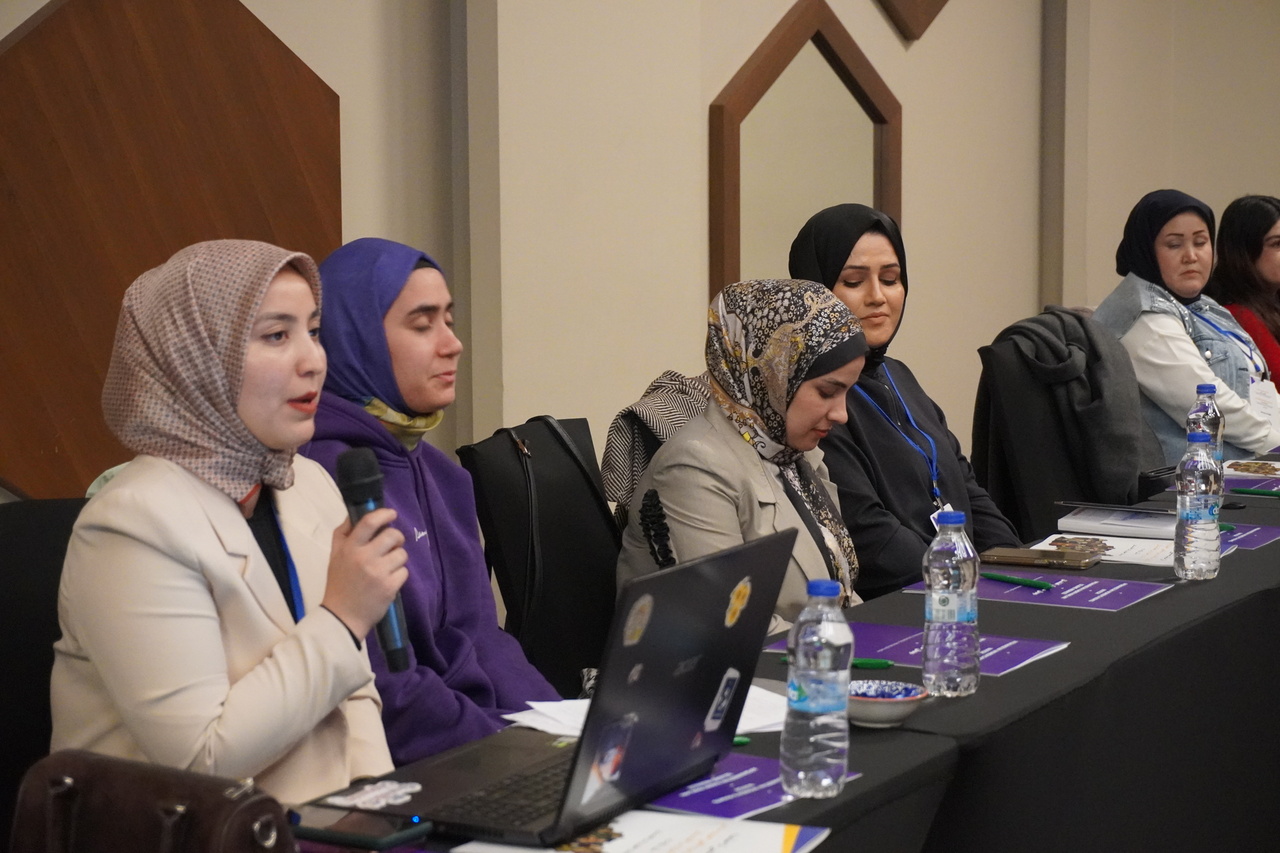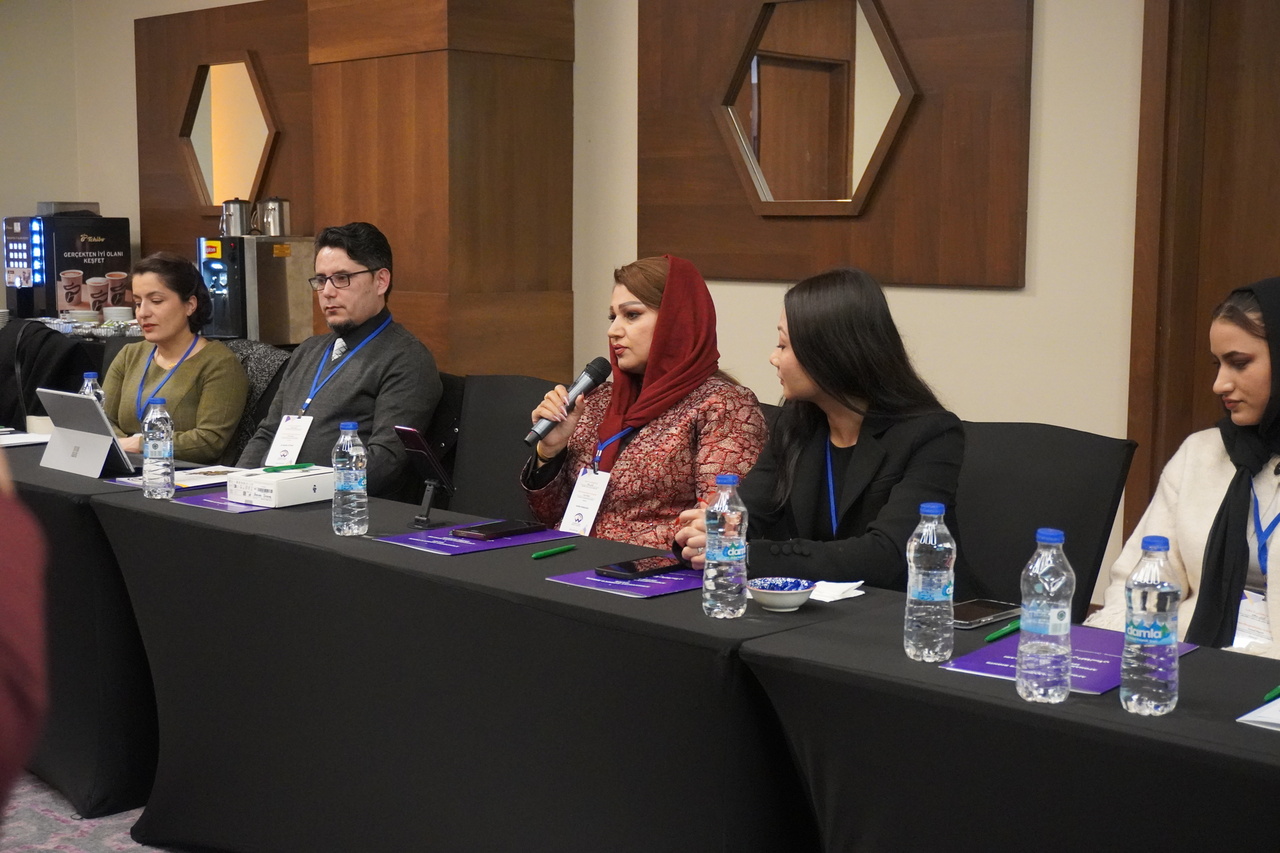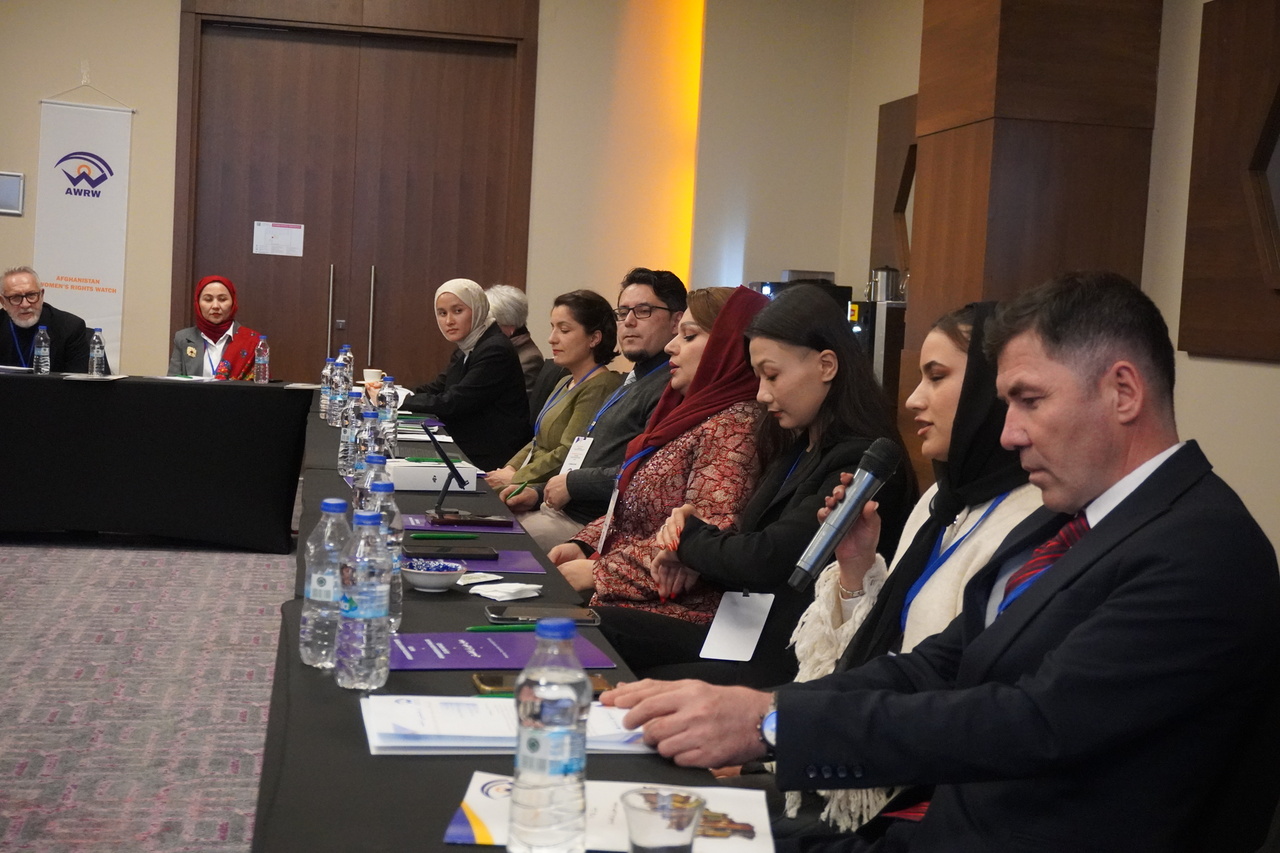

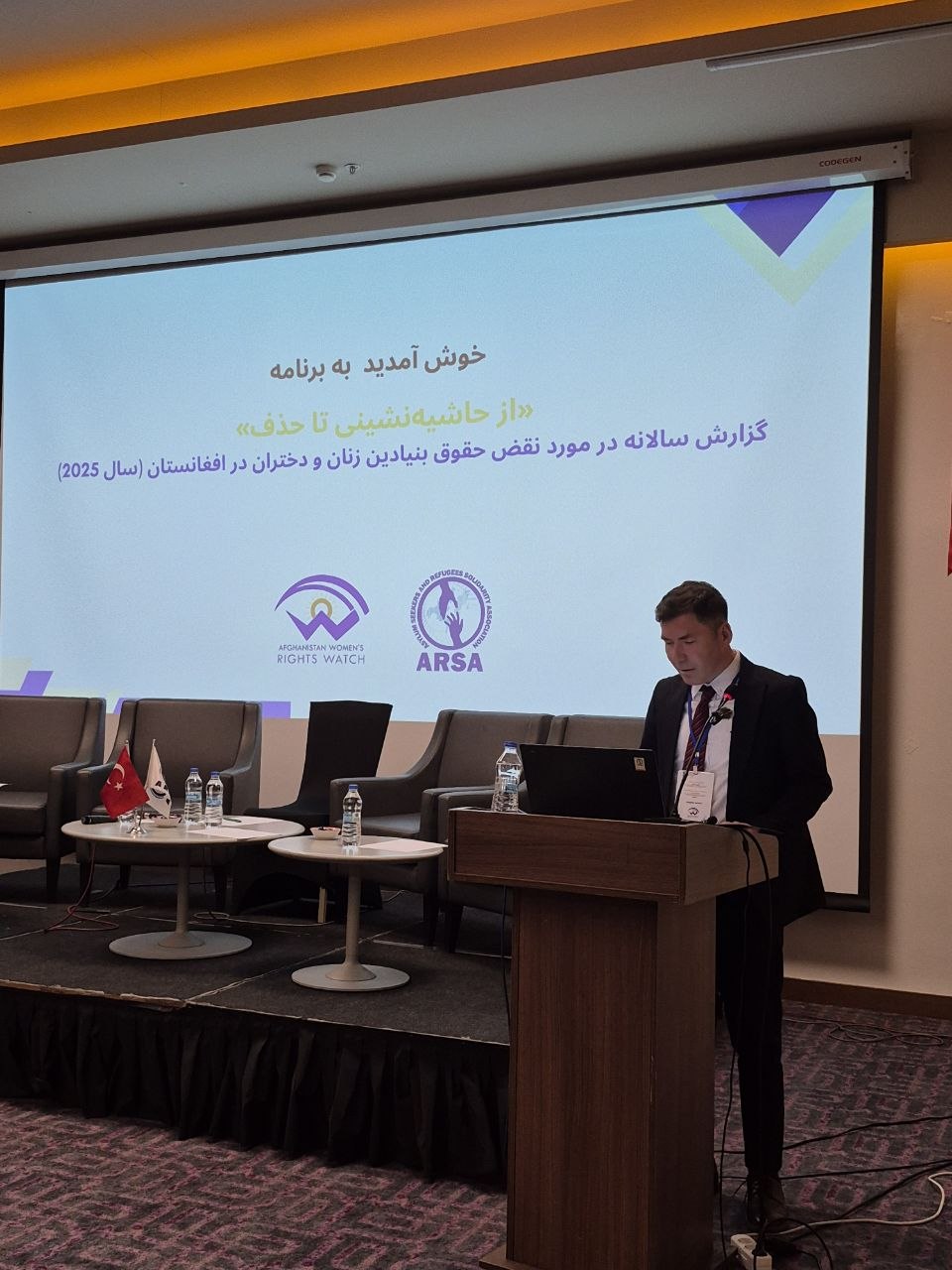
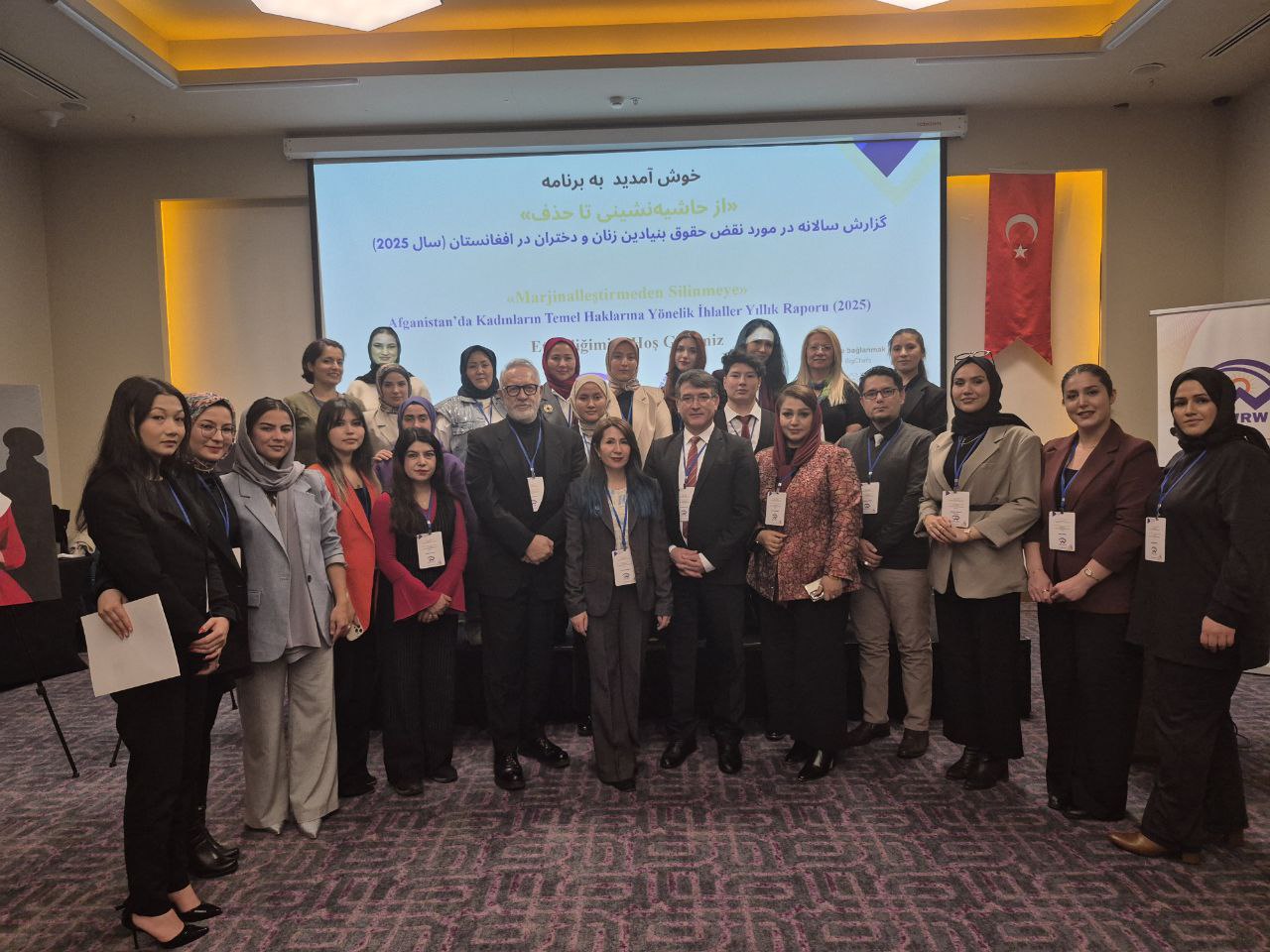
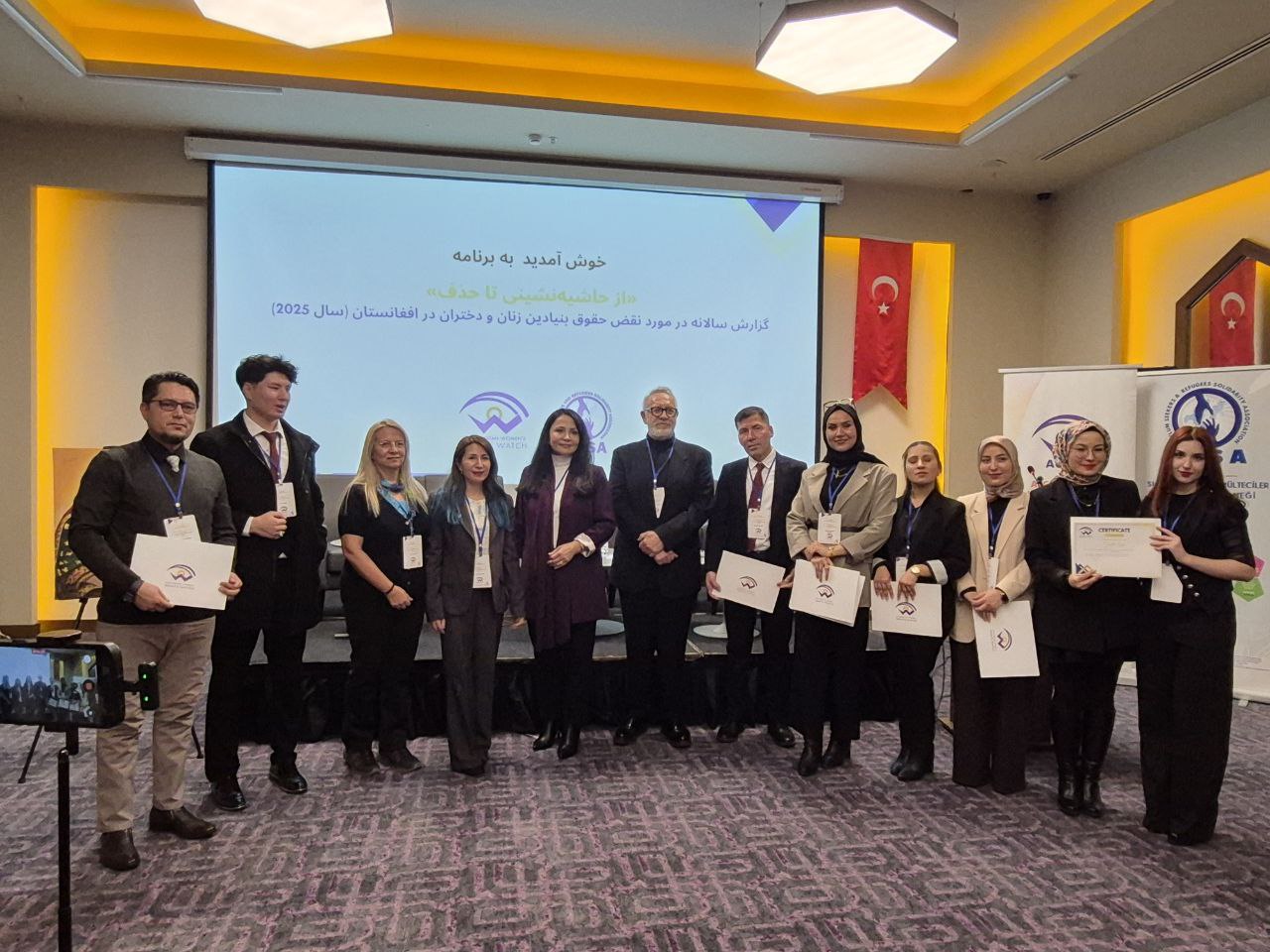
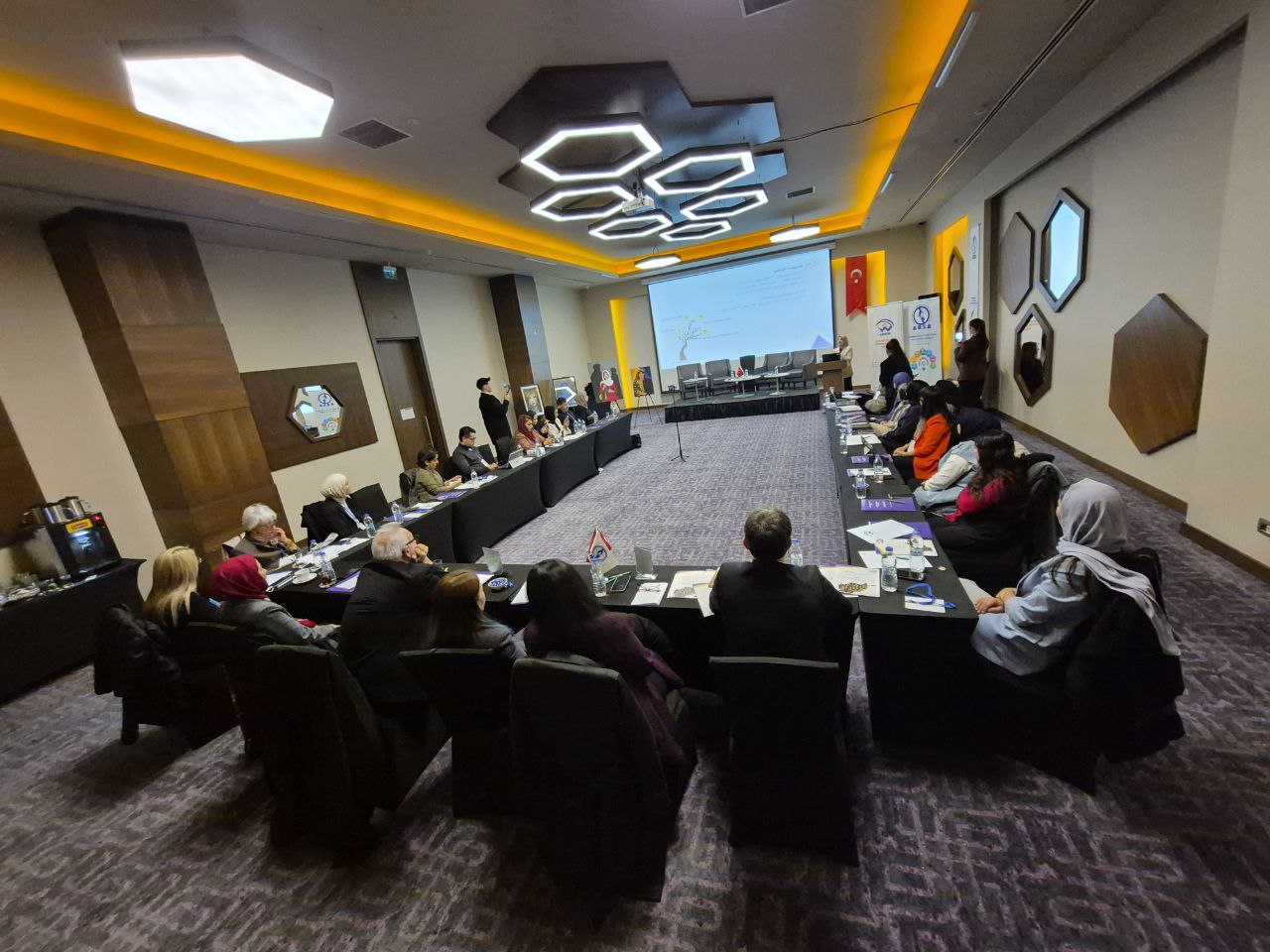
Afghanistan Women’s Rights Watch officially launched its 2025 annual report, titled “From Marginalization to Erasure,” on 14 February 2026 in Kayseri. The event was organized with the support of ARSA and hosted at Holiday Inn Kayseri, bringing together academics, civil society representatives, journalists, and network members from different cities across Türkiye.
The report documents the expanding scope of women’s rights violations in Afghanistan and presents verified data illustrating the systematic exclusion of women from social, legal, and public life. It highlights how institutional mechanisms and policy decisions have intensified restrictions, shaping a deeply entrenched pattern of gender-based repression.
Opening Remarks
The program began with an address by Dr. Zakira Hekmat, President of Afghanistan Women’s Rights Watch, who outlined the methodology and key findings of the report. She emphasized the responsibility of the international community to respond to the deteriorating conditions facing women and girls in Afghanistan.
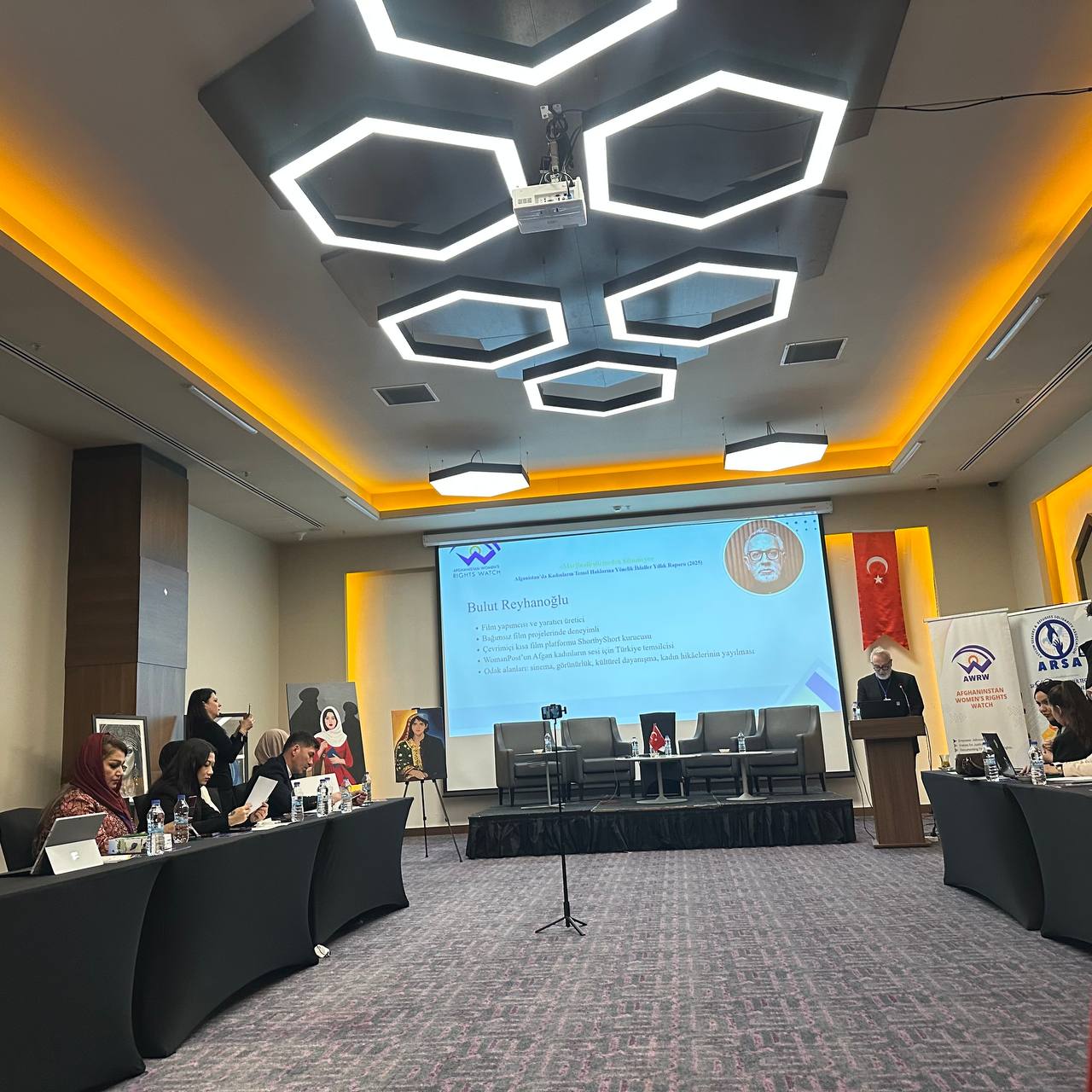
Bulut Reyhanoğlu, Global Solidarity Ambassador for amplifying Afghan women’s voices, underlined the importance of sustained international advocacy. Dr. Aliye Yılmaz from Süleyman Demirel University provided an academic perspective on the broader cultural and societal implications of current policies.
411 Documented Violations in 2025
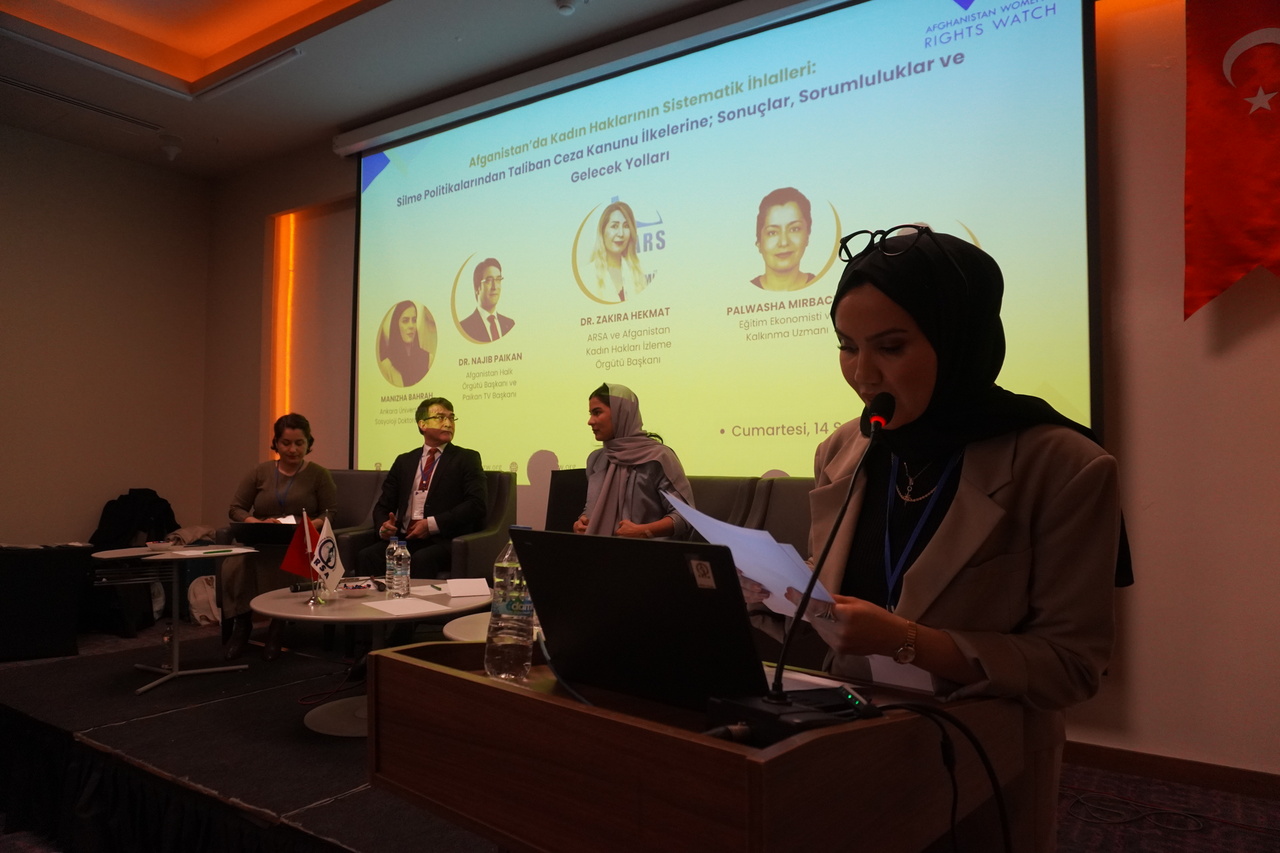
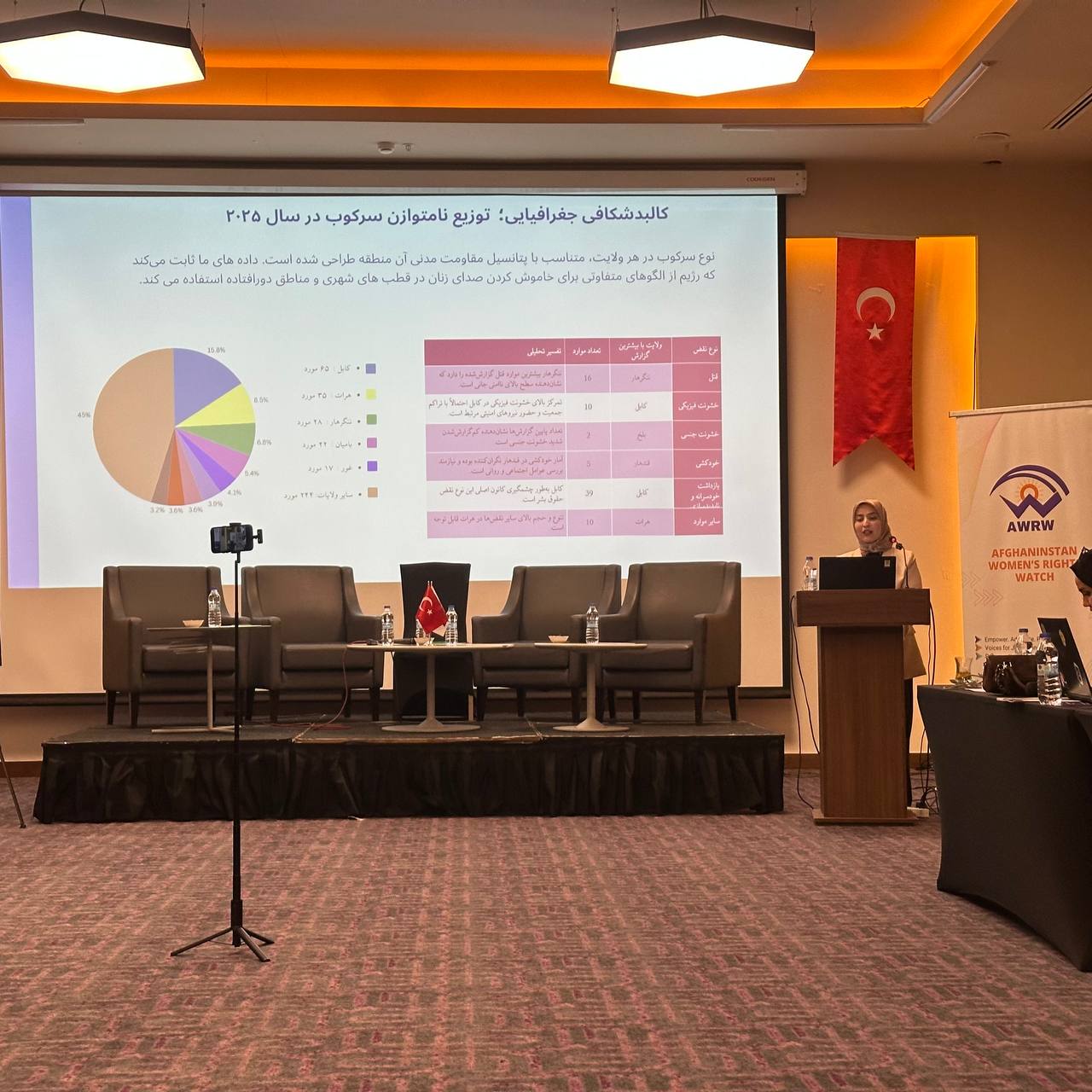
Presented by Tahera Jafari, the 2025 report is based on 411 documented and cross-verified cases of women’s rights violations. The data was compiled through a multi-layered verification process using media records, documented testimonies, and other verifiable sources.
According to the report:
-
76 cases of intentional killings of women were recorded.
-
130 public flogging cases were reported.
-
72 cases of arbitrary detention and enforced disappearance were confirmed.
-
32 women died by suicide.
-
258 cases remained without any official investigation or legal action.
The findings reflect widespread impunity and serious barriers to justice for women.
Disproportionate Impact on Young Women
A significant proportion of the documented cases involve women aged 18 to 34. More than two-thirds of the recorded violations affected this age group, many of whom had completed or were pursuing higher education.
The report indicates that young women were particularly vulnerable to arbitrary detention, public punishment, and sustained psychological pressure. These patterns have had direct consequences on their safety, mobility, and future prospects.
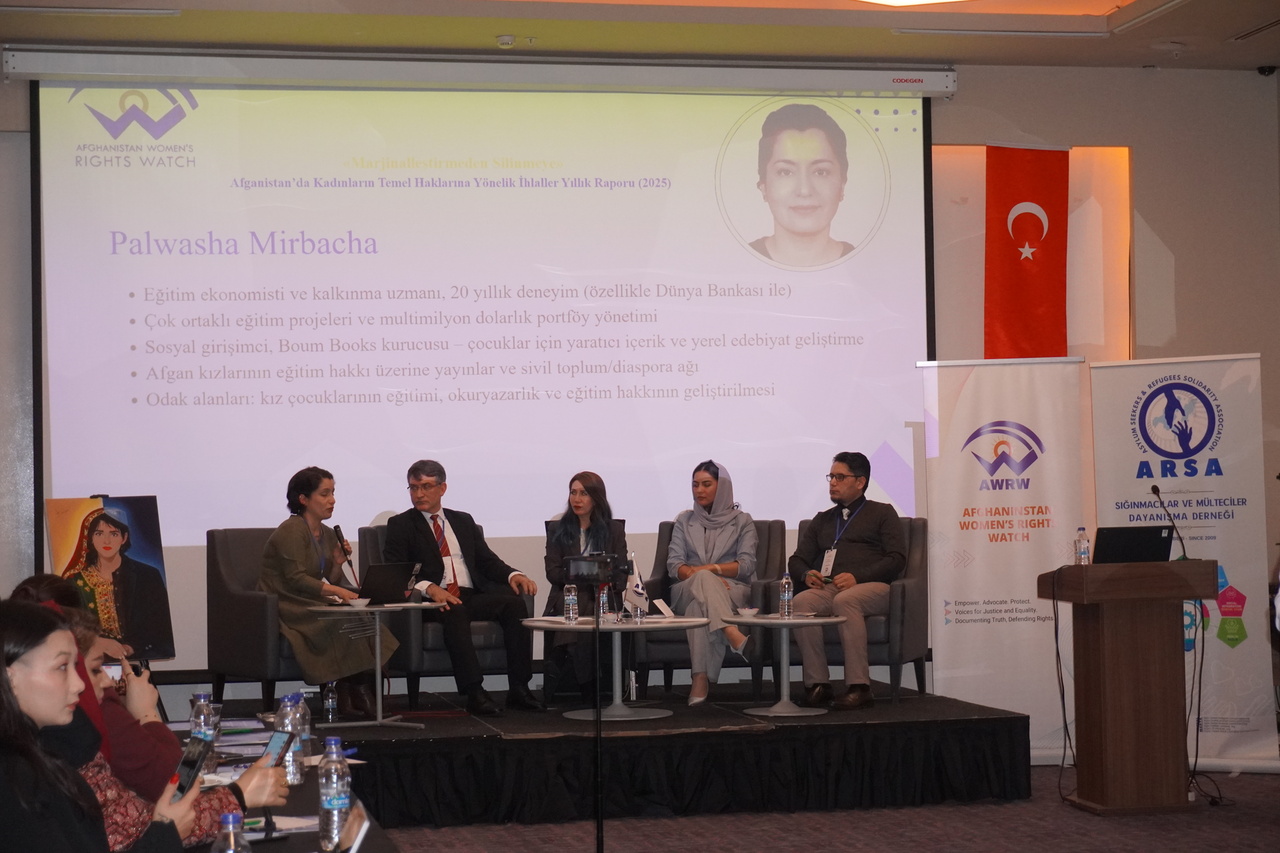
Expert Panel Discussion
An expert panel titled “Gender Apartheid in Afghanistan: Systematic Violations, Legal Frameworks, and Future Pathways” examined the legal, social, and humanitarian dimensions of the crisis.
Panelists discussed the impact of restrictive legal measures on civil liberties, the broader societal consequences of women’s exclusion, and the need for coordinated international documentation and accountability mechanisms. Strengthening awareness and institutional responses was identified as a key priority.
Geographic Scope and Long-Term Consequences
The report shows that violations were recorded across multiple provinces, with the highest numbers documented in Kabul, Nangarhar, and Kandahar. The data demonstrates that the crisis extends nationwide rather than being confined to isolated regions.
Experts noted that the sustained removal of women from education, employment, and public life carries far-reaching economic and social consequences. The erosion of women’s participation affects public health, social cohesion, and long-term development prospects.
Closing
The event concluded with a discussion session and closing remarks emphasizing the importance of sustained international engagement. Participants highlighted the urgent need to keep the situation of Afghan women visible within global policy and human rights agendas.
“From Marginalization to Erasure” serves as a comprehensive documentation effort and contributes to preserving verified evidence for future accountability and advocacy initiatives.

.jpg)

.jpg)