


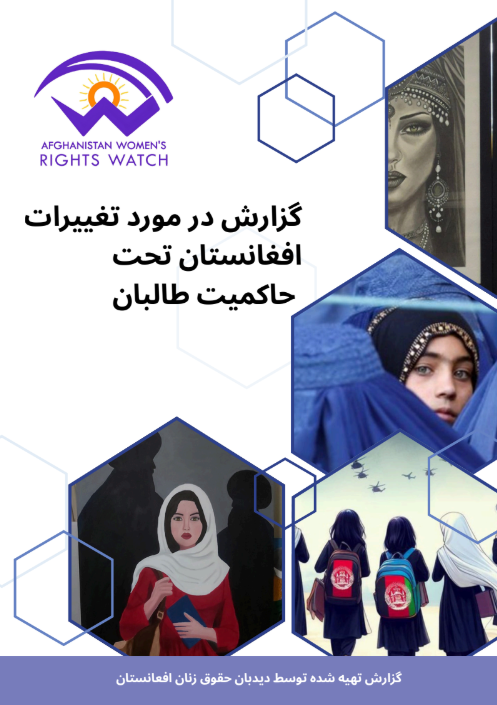
Afghanistan Women’s Rights Watch (AWRW) has released its comprehensive research report titled “Changes in Afghanistan Under Taliban Rule.” The report provides an in-depth analysis of the political, social, economic, and humanitarian transformations that have taken place in Afghanistan since August 2021, with a particular focus on the impact on women, girls, and children.
August 15 marks a turning point in Afghanistan’s modern history — a day when millions of women and girls were stripped of their fundamental rights to education, employment, freedom of movement, and participation in public life. The report demonstrates how the Taliban’s initial promises regarding women’s rights were gradually replaced by systematic gender-based restrictions and the near-total exclusion of women from society.
Key Findings of the Report
Systematic Deprivation of Women’s Right to Education
The ban on girls’ education beyond sixth grade, the complete suspension of university education for women, and the prohibition of medical training programs such as nursing and midwifery have made Afghanistan the only country in the world where girls are barred from both secondary and higher education.
Exclusion of Women from the Workforce
Women have been banned from working in government institutions, most NGOs, and large segments of the private sector. These restrictions have resulted in the loss of tens of thousands of jobs and have significantly increased women’s economic dependency.
Deepening Economic and Humanitarian Crisis
Since 2021, Afghanistan’s economy has contracted by nearly 30%. Poverty, unemployment, and food insecurity have reached alarming levels. Women-headed households have been disproportionately affected, facing severe income losses and limited access to basic services.
Extensive Social and Legal Control
The enactment of the “Promotion of Virtue and Prevention of Vice” law in 2024 has intensified restrictions on women’s mobility, speech, and public presence. Media freedoms and cultural expression have also been heavily suppressed. Many international human rights organizations have described these policies as constituting “gender apartheid.”
International Responses and Ongoing Challenges
While the United Nations and global human rights organizations have repeatedly condemned the Taliban’s policies, funding cuts and restrictions on female humanitarian workers have significantly hampered aid delivery. Millions remain dependent on humanitarian assistance amid shrinking international support.
Message from Afghanistan Women’s Rights Watch
In the foreword of the report, Dr. Zakira Hekmat, President of AWRW, states:
“Afghanistan’s future cannot be built without the participation and leadership of women. Today, more than ever, there is an urgent need for global solidarity, a unified voice, and meaningful action.”
The report is based on field data, legal analysis, and credible international sources. It calls on the international community to recognize the severity of the ongoing crisis and to provide sustained, practical support to Afghan women and girls.
Full Report
.png)